
Funding Approved to Achieve the Objectives of the European Green Deal: Rail Baltica Project Also Receives Funding
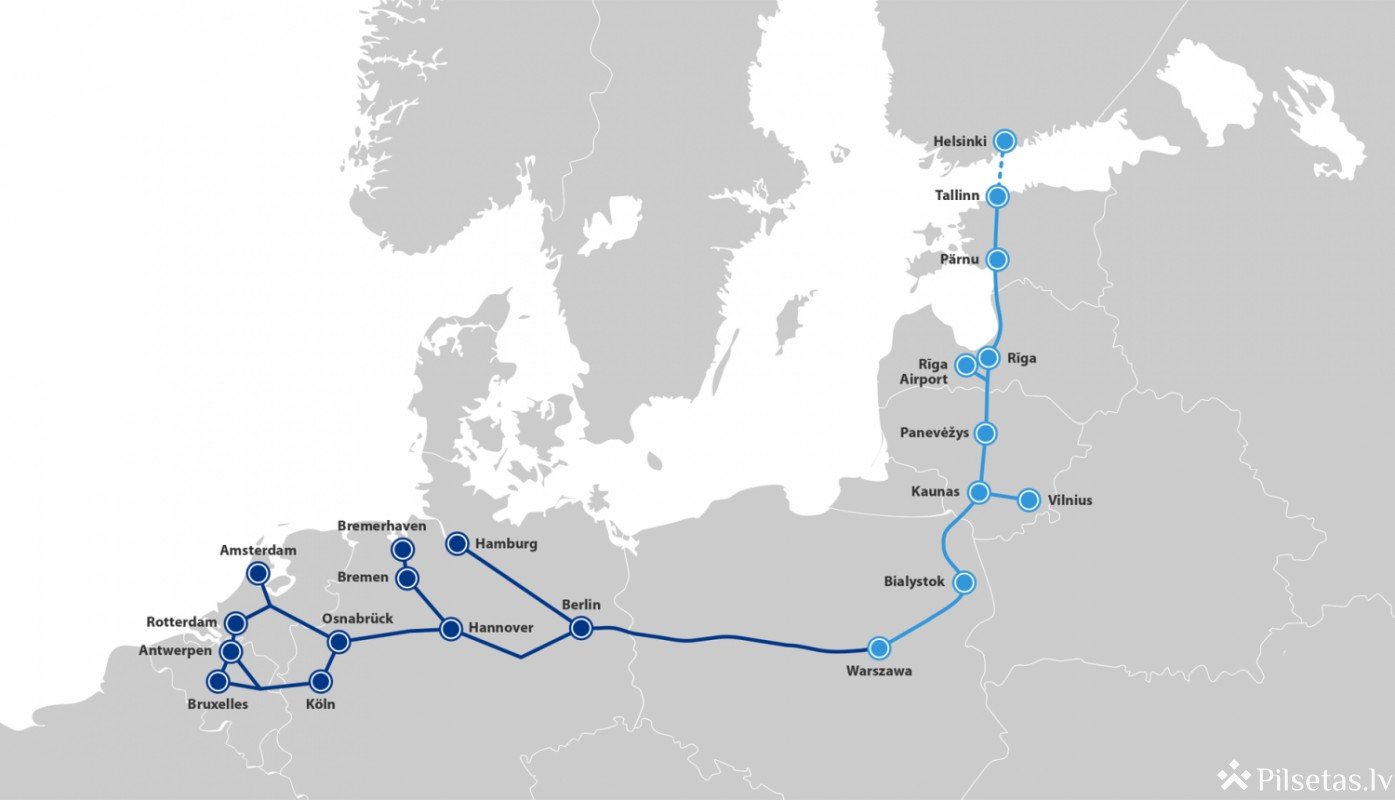
On Thursday, 15 July, the European Commission (EC), demonstrating its commitment to ensuring the development of an environmentally friendly, user-safe and smart transport network, agreed to allocate €242.2 million in funding from the Connecting Europe Facility (Connecting Europe Facility or CEF) for transport infrastructure projects. The agreement provides funding for the Baltic States to implement the Rail Baltica project; the indicative amount of funding for Latvia is approximately €5 million.
“This week, we adopted important legislative proposals that will help the European Union (EU) reduce its net greenhouse gas emissions by at least 55% by 2030. The studies that we are supporting today through the Connecting Europe Facility contribute to this objective. They are the starting point for many projects that will help accelerate the transition to a smart and sustainable transport network. In the future, we plan to allocate €30 billion for transport, digital and energy projects through the Connecting Europe Facility programme for 2021–2027, bringing us closer to achieving the objectives of the European Green Deal,” said European Union Transport Commissioner Adina-Ioana Vălean (Adina-Ioana Vălean).
“Rail Baltica is a project of vital importance to the development of the national economy, which is being implemented with EU co-financing. A modern railway line is being built that will connect us with Europe, opening up new business opportunities. At the same time, we are creating convenient regional transport connections that will significantly improve the mobility of residents. We are pleased with the progress made so far in attracting funding from the Connecting Europe Facility,” commented Ligita Austrupe, Deputy State Secretary of the Ministry of Transport.
The EU continues to support projects that help achieve the climate objectives of the European Green Deal. In total, funding has been allocated to 68 study projects that will promote infrastructure improvements in the future and, once implemented, help create missing transport connections in Europe, support sustainable transport and create new jobs. More than half of the supported projects will contribute to the creation of a stronger European railway network by developing cross-border connections and reinforcing its most important sections.
All three Baltic States will also receive financial support to fund further project activities of Rail Baltica from the Cohesion Fund. The indicative amount of funding for Latvia is approximately €5 million. It is planned that the financing agreement will be signed by the end of 2021.
To date, Latvia has received approximately €313 million in CEF funding, having participated in CEF calls 1, 2, 3 and 6.
The EU will support studies necessary for implementing future railway infrastructure projects located on the core network of the Trans-European Transport Network (TEN-T), providing €181.4 million in funding for 37 projects submitted under the call. The projects were selected for funding through a competitive procedure, with EU Member States participating in the call launched at the end of 2020. The EU’s financial contribution is provided in the form of grants, with different co-financing rates depending on whether the project is located in a country eligible for Cohesion Fund support.
Under the CEF Transport programme, €23.4 billion was allocated from the EU budget for the 2014–2020 period to co-finance TEN-T projects in EU Member States. Since 2014, six CEF calls for project applications have been launched, supporting 955 projects in the transport sector for a total amount of €23 billion.
Following approval of the selected projects by the EU Member States, the European Commission will adopt formal decisions on the financing process in the coming weeks. The European Climate, Infrastructure and Environment Executive Agency (CINEA) will then begin work on concluding agreements with the project beneficiaries.
CINEA press release
Additional information:
The primary source of funding for the Rail Baltica project is the EU funding allocated by the European Commission through the Connecting Europe Facility. CEF funding accounts for up to 85% of the project’s total costs. The remaining 15% is financed by the Baltic States from national budget resources. EC funding for the project is allocated in instalments, following the project’s implementation and assessing the absorption of funding. If implementation proceeds successfully, Latvia may apply for additional CEF funding in future calls, requesting funding for the project’s subsequent activities.
Funding received to date has been used for the planning, detailed design and construction activities of the Rail Baltica project. Environmental impact assessment procedures have been carried out to coordinate and approve the route alignment within Latvian territory with local authorities and residents. The planning and design of Rail Baltica infrastructure maintenance facilities, regional stations and stops have been implemented, and the expropriation process for immovable properties affected by the Rail Baltica route has begun. Construction of the Riga Central multimodal transport hub has begun, as has construction of the multimodal transport hub at Riga International Airport for Rail Baltica.
To ensure the €1.968 billion required to implement the project and cover Latvia’s share of the costs, approximately €1.6 billion in additional funding still needs to be attracted. It is planned to obtain these funds by participating in CEF II calls during the next long-term EU budget planning period from 2021 to 2027.
Author:
Communications Department
Ministry of Transport
sam.gov.lv








