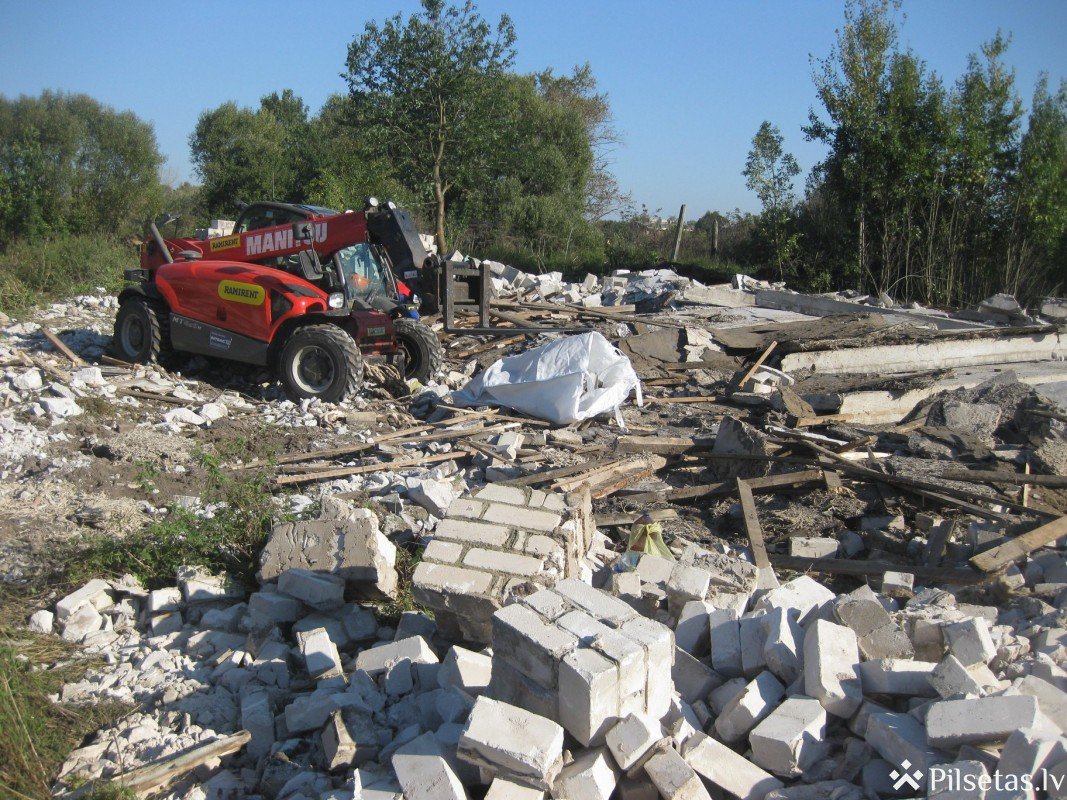
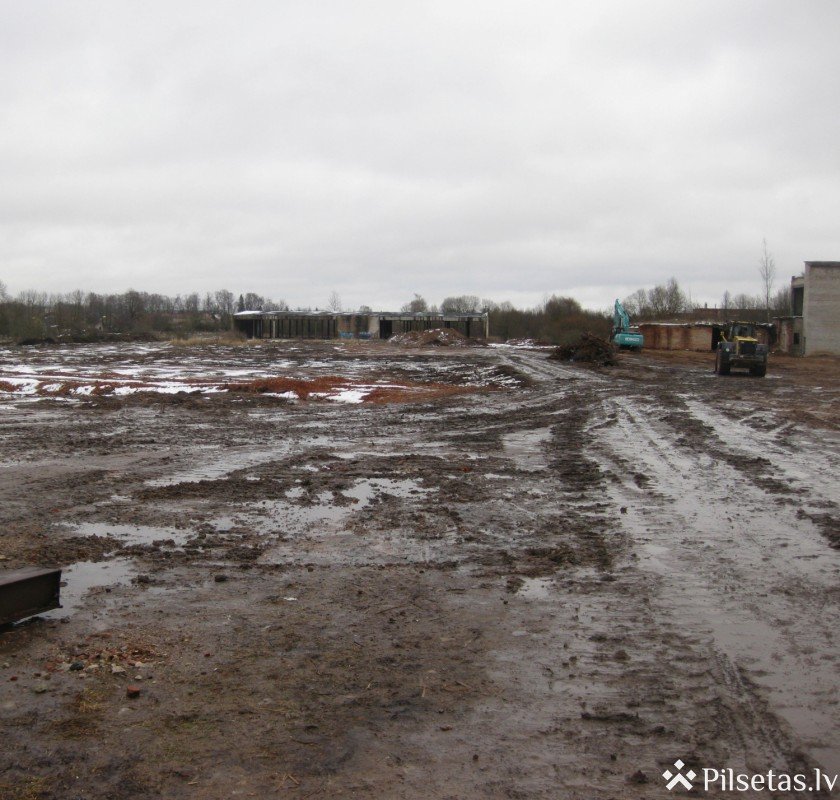
In the final months of 2018, the residents of Ludza saw active work taking place on the site of the so-called former flax factory: heavy machinery was operating and the old buildings were disappearing. For several decades, “ghost buildings” had stood on this site. Thanks to funding from the European Union, the Ludza Municipality finally managed to put it in order. Most of the old derelict structures were demolished.
The construction debris from the demolished buildings was sorted, and hazardous waste, such as asbestos, was disposed of at a landfill. The bricks and reinforced concrete were crushed, with metal particles separated from the structural components using a magnet, and were used as recycled construction material to reinforce the foundations of sites and roads in the city. The area was cleaned up and put in order—the overgrowth was removed, bushes were cut down, pits were filled in, and waste was collected and disposed of.
In spring, plants are planned to be planted in a small part of the area. A new phytoremediation method will be used in this work. The sophisticated word “phytoremediation” is based on two words: “phyto” in Greek, meaning “plant”, and the Latin word “remedium”—“remedy, medicine, healing agent, restoration of balance”. In simple terms, phytoremediation is the purification of contaminated areas with the help of plants. We rarely stop to think that the plants around us are very resilient and capable of many things. Phytoremediation is based on plants’ ability to break down toxic substances and release them into the atmosphere in a less harmful form, while microorganisms associated with plant roots simultaneously absorb or degrade pollutants in the soil. In Latvia, willows, which grow well in sandy and acidic soils; fescues, which are also suitable for damp and peaty soils; alfalfa; white clover; hybrid aspens; hybrid willows; and other plants can be used to clean up contamination. The “bouquet” of heavy metals in the flax-factory soil consists of chromium, copper, lead, and zinc. Hopefully, the plants will succeed in removing these metals from the soil.
The municipality is restoring this plot of land not only to create a beautiful landscape, but also so that it can be offered to investors who would start operations here, attracting investment and creating new jobs.
This is a cooperation project led by the Latvia University of Life Sciences and Technologies, with the Ludza Municipality and the municipalities of the Ignalina and Kupiškis districts of the Republic of Lithuania serving as cooperation partners. The total project costs for the Ludza Municipality amount to EUR 460 559.65. The project’s co-financing from the European Regional Development Fund amounts to EUR 391 475.70.
The activities are being carried out במסגרת the project “Innovative Brownfield Regeneration for Sustainable Development of Cross-Border Regions” (BrownReg, No. LLI-325; Innovative brownfield regeneration for sustainable development of cross-border regions), co-financed by the Latvia–Lithuania Cross-Border Cooperation Programme for 2014–2020.