
Battery Trains – A More Environmentally Friendly Solution for Non-Electrified Railway Lines
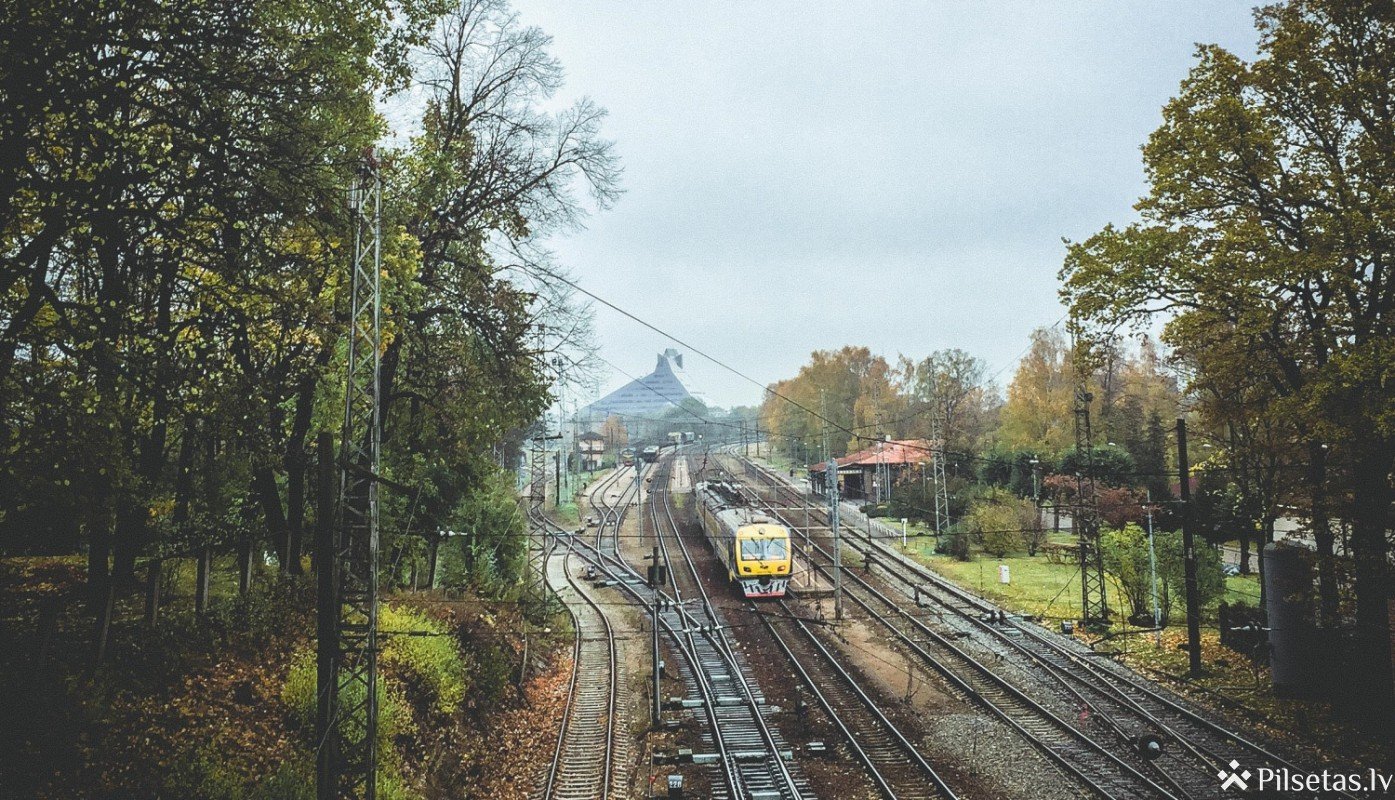
By 2026, a green transport reform is planned for Riga and its metropolitan area, under which the railway will be strengthened as the backbone of public transport. Recovery Fund investments are planned both for modernising and constructing railway sections and for modern rolling stock, including the purchase of battery trains, which are a more environmentally friendly zero-emission technology.
The green transport reform will encourage changes in the travel habits of residents of the Riga metropolitan area by creating a competitive, environmentally friendly public transport and micromobility offering as an alternative to private transport.
One of the railway modernisation projects is the purchase of battery trains. Battery trains (battery electric multiple units – BEMUs) are currently gaining popularity in Europe as countries strive to achieve their climate targets. Battery trains are equipped with battery technology that allows them to travel both on electrified lines or sections, using electricity from the overhead contact line, and on non-electrified lines, using energy stored in the batteries. Thus, compared with diesel trains, battery trains are a more environmentally friendly solution for residents whose daily journeys take them along non-electrified parts of the railway network. The advantages of battery trains are also felt by those who live close to railway tracks – such modern trains are quieter and cause less environmental pollution.
Battery technology is developing rapidly, and such trains would make it possible to provide zero-emission passenger transport services on non-electrified railway lines. The advantage of battery systems is that there is no need to implement an expensive electrification project on lines with low traffic intensity; this is an environmentally friendly technology with very low noise levels.
The optimal battery-system model is to use battery trains on already electrified lines, where they are charged during the journey, while the batteries can provide additional range on the non-electrified section without major additional infrastructure improvements.
The disadvantages of battery systems include the ability to cover only relatively short distances, because with current battery technologies, the energy consumption required for train operation does not provide a sufficiently long operating range. However, under favourable conditions, manufacturers already promise a range of more than 100 km on a full charge. Batteries add to the train’s weight, and their replacement and disposal may also create additional problems.
To determine the most suitable parameters for operating battery trains in Latvia, in the second half of 2021 the Ministry of Transport planned to commission a technical and economic feasibility study to assess the technological and economic aspects of the proposed investments.
Battery trains are widely used in Austria, Germany, Ireland, the United Kingdom and Japan. Battery trains are also beginning to be used in Denmark, France and Hungary. Lithuania also plans to use battery trains.
Additional information:
Latvia has contributed to the history of battery train construction. The project for a contact-battery electric locomotive was developed at the public design bureau of the Scientific and Technical Association of Baltic Railways in Riga. In 1966–67, 10 locomotives of this series were manufactured in Dnipropetrovsk. Six of them were used in Latvia. The exhibit on display at the Railway History Museum worked in the sections served by the Zasulauks depot. The locomotive was used for shunting operations and for hauling collection trains in the Riga area, on both electrified and non-electrified sections (using batteries).
More information – https://www.sam.gov.lv/lv/jaunums/bateriju-vilcieni-videi-draudzigaks-risinajums-neelektrificetam-dzelzcela-linijam
Author:
Communications Division
Ministry of Transport
sam.gov.lv








