
The quality of the 112 emergency assistance hotline will be significantly improved.
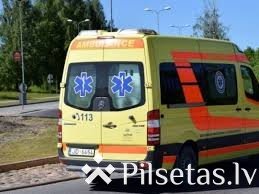
On Thursday, 18 February, the Cabinet of Ministers approved the informative report prepared by the Ministry of the Interior, “Unified Contact Centre Platform to Support the Work of Emergency Services and the Delivery of Public Services”, which provides for changes to the organisational structure of 112 call centres and a significant improvement in the quality of services provided by the emergency assistance hotline.
“Nothing can be more important than saving human lives. Every second counts, so we cannot allow the quality of call handling to suffer. By following the report prepared by the ministry, we would improve the services’ ability to respond in emergency situations by introducing a unified 112 contact centre. These improvements will also help determine more precisely the caller’s location, enabling emergency services to reach the scene more quickly and provide assistance,” said Minister of the Interior Sandis Ģirģens.
A study of the current situation concluded that, for example, when calling 112 for medical assistance, the call is redirected and the caller has to explain the situation again, resulting in the loss of valuable time.
A two-tier model for processing emergency assistance calls and carrying out responses is planned. This model will make it easier for callers to provide information, as they will not be redirected to another emergency service unless direct assistance from the relevant service is required, such as medical support.
The functions for handling 112 calls will be organised at two levels: at the first level, the call centre will receive all emergency assistance calls, including calls currently made to 110 and, in the future, calls to 113; establish the caller’s location; determine the reason for the call; and identify the emergency service to which the reported incident should subsequently be forwarded. When the call is received, all information about the incident will be entered into the Unified Electronic Incident Card (UEIC). The UEIC will then be automatically sent to all emergency services involved.
At the second level, the emergency services involved in the situation will receive the aforementioned electronic card and dispatch their units to the scene accordingly. This will promote communication between the services, as all the services involved will receive the information simultaneously. In addition, if a person calls 112 again to ask when assistance will arrive, the call-centre employee will be able to provide information on how far the relevant unit is from the scene.
Another important improvement is the more precise determination of the caller’s location—within a radius of up to 50 metres—thanks to the Advanced Mobile Location (AML) system. The caller’s location will be determined precisely using information provided by the Global Positioning System (GPS) or a wireless local area network (Wi-Fi).
The project also plans to introduce a mobile application so that people can use broader modern communication options with the 112 contact centre, sending pictures or even short videos to report where and what kind of incident has occurred. Functionality will also be developed for people with special needs, enabling them to report an accident or emergency.
To achieve all the planned objectives, the capacity of the 112 contact centre will be increased: more employees will have to be recruited, employees will have to be trained and their qualifications improved, and suitable working conditions will have to be provided.
The technical solution for providing the aforementioned functions is being developed through the implementation of ERDF project No. 2.2.1.1/17/I/024, “Unified Contact Centre Platform to Support the Work of Emergency Services and the Delivery of Public Services”, while the call centres will be established using state budget funds.
Additional information:
Ministry of the Interior
- Published: 18.02.2021 12:36
- Press release, LETA








