
Three new Adolescent Resource Centres begin operating in Daugavpils, Valmiera and Ventspils
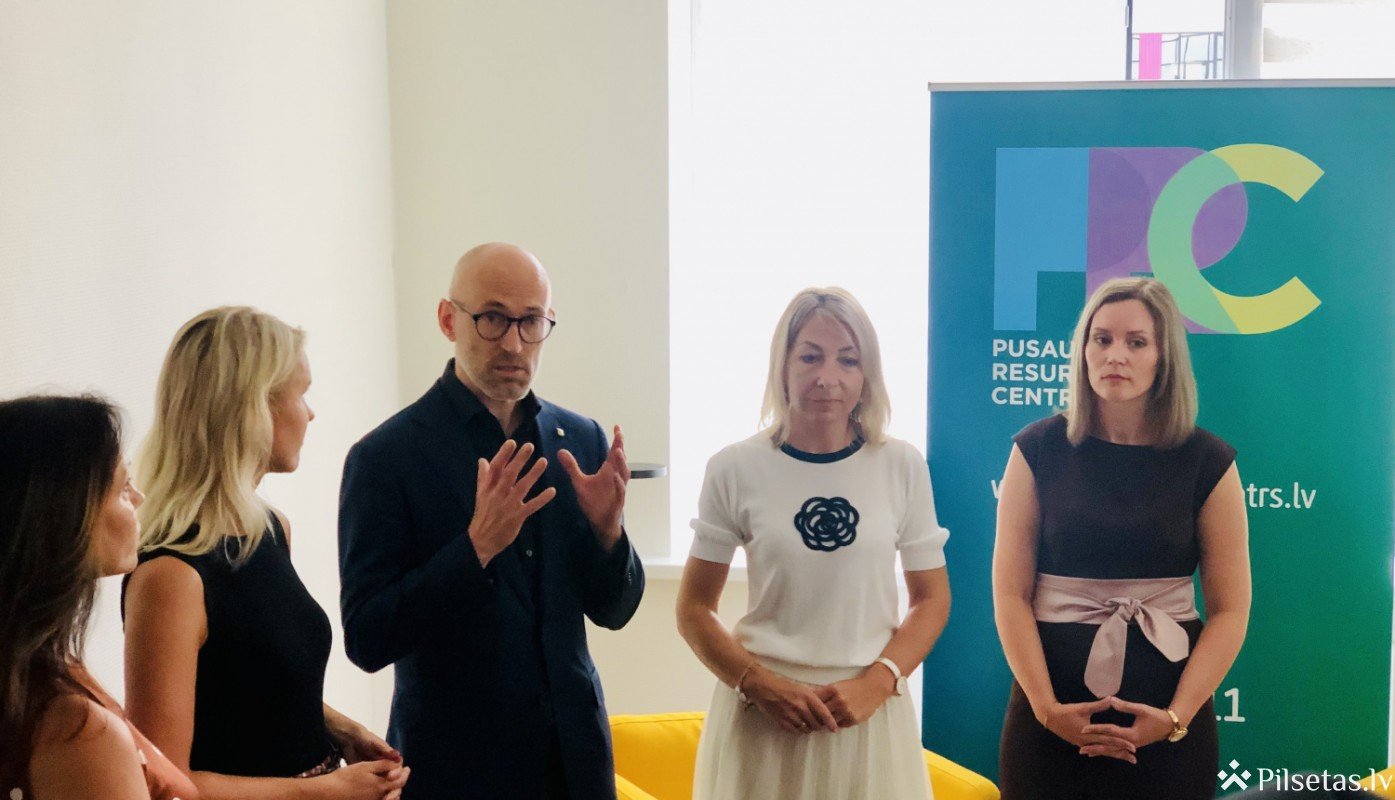
Since 1 July, thanks to funding from the Ministry of Health, three new branches of the Adolescent Resource Centre (ARC) have begun operating in Valmiera, Ventspils and Daugavpils, while the centres in Riga and Liepāja have expanded the opportunities for adolescents to receive help. Today, with the participation of Minister of Health Daniels Pavļuts and representatives of the Ventspils municipality and Social Service, the Ventspils branch was opened, and an information event was held at which representatives of the ARC centres in Riga and Ventspils provided information about the services that adolescents and their parents can now receive in the regions.
In the first half of 2021, 1,026 adolescents or their relatives had already turned to the ARC for help. From now on, every adolescent experiencing mental health difficulties and their family can apply to one of the Adolescent Resource Centres and receive professional, multidisciplinary and friendly help free of charge.
Minister of Health Daniels Pavļuts emphasises: “Timely support for mental health difficulties during adolescence is crucial, and it makes it possible to prevent problems that are much more difficult for a person to change in adulthood. These are the first solid building blocks in creating a targeted support network to strengthen the mental health of our children outside Riga. I very much hope that other cross-sectoral initiatives will also join it in the future. Unlike physical health, mental health cannot be created in isolation—the mental health of a person, and especially of children and adolescents, is the result of the joint efforts of the family, educational and social environments.”
“From the very first day we established the Adolescent Resource Centre, our aim was to make this kind of help available to young people in the regions as well. We have received requests for support from more than 60 cities and towns across all of Latvia’s municipalities, so the new regional centres are a valuable opportunity for every adolescent with mental health problems to receive timely help. Our team is a major asset: it comprises 40 experienced specialists, including child psychiatrists and adolescent addiction psychiatrists, and their knowledge and support are now also available to adolescents at regional centres,” commented Liene Dambiņa, head of the Children’s Hospital Foundation. “During the pandemic, demand for help increased very rapidly, and 168 young people in Riga are currently already waiting in line. Therefore, the funding allocated by the Ministry of Health will also help adolescents in Riga receive the necessary support,” said L. Dambiņa.
The number of adolescents who contact the ARC themselves and seek help has also increased. In 2021, there were an average of 25 young people each month. The most common problems they mention are depressive symptoms—56% (low mood, loss of motivation, withdrawal, feelings of loneliness and helplessness), suicidal thoughts and/or self-harm—45% (aggressiveness, irritability, anger and hostility), disturbances in self-image—40% (low self-esteem, self-criticism, lack of self-acceptance), as well as difficulties with socialisation and family conflicts—40% (critical parents, lack of acceptance, social exclusion, difficulty forming friendships).
Dr Anete Masaļska, head of the Adolescent Resource Centre and child psychiatrist: “In the regions, this kind of help for adolescents has, one might say, been inaccessible, so we are pleased to have the opportunity to establish Adolescent Resource Centre branches and attract good specialists in the regions, with whom we will work as a single team in the future. The principle of teamwork is very important, because adolescents’ problems are often complex, requiring the involvement not only of a psychologist or psychiatrist, but also of a physiotherapist, nutrition specialist and other colleagues. Professional support is also necessary for adolescents’ parents, especially when an adolescent is at risk of suicide, which is a difficult situation for the entire family.”
The ARC also offers resources for adolescents’ parents as their primary support persons—both parent support and psychoeducational groups, as well as individual consultations. The parent groups cover topics such as the main developmental tasks of adolescence, relationships within and outside the family, forms of family communication, mental health and care for it.
“It is very valuable that help for adolescents with depression and suicide risk, funded by the Ministry of Health, is now available at all our centres. However, our next goal is that, as in Liepāja and Riga, the service funded by the Ministry of Welfare for adolescents at risk of addiction should also be implemented in Valmiera, Ventspils and Daugavpils. This service includes the support of a social worker and a mentor. As can be seen from the internal diagnostic records of our centre, in practically all cases involving addiction risks, specialists also identify other mental health difficulties. For adolescents at risk of alcohol and substance addiction, these are primarily behavioural disorders—truancy, absences from school and aggression—as well as heightened anxiety. Among adolescents at risk of behavioural addictions, depression and self-harm are more frequently observed, as are unnoticed mental health disorders from childhood, such as attention deficit and hyperactivity. This confirms that it is particularly important for specialists to be able to provide adolescents with comprehensive assessment and help for all the difficulties of adolescence, according to each adolescent’s individual situation,” A. Masaļska.
More information - https://www.vm.gov.lv/lv/jaunums/darbu-uzsak-3-jauni-pusaudzu-resursu-centri-daugavpili-valmiera-un-ventspili
Author:
Ministry of Health
vm.gov.lv








