
"Fortum" to burn refuse-derived fuel
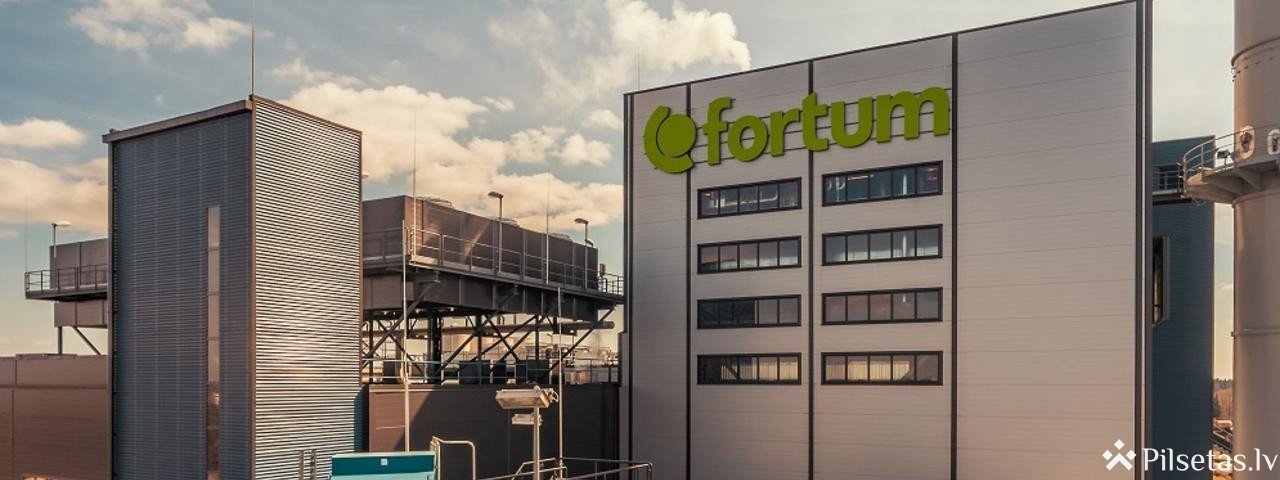
SIA "Fortum Latvia" plans to diversify the fuel used at the Jelgava biomass cogeneration plant and also burn specially sorted and prepared refuse-derived fuel there; therefore, the State Environmental Monitoring Bureau (VPVB) will carry out an environmental impact assessment of the proposed activity. The initial public consultation meeting will take place on 19 February at 17:00 at the premises of Jelgava Municipality.
SIA “Fortum Latvia”’s cogeneration plant at 73A Rūpniecības Street was commissioned in 2013. Its task is to provide the residents, institutions and businesses of Jelgava with heat produced from local renewable resources, thereby promoting the efficient and sustainable use of resources, the circular economy and the reduction of CO2 emissions from energy production in the city. From the outset, the technological part of the project included the possibility that, in the future, alongside wood biomass and peat, other fuels could also be burned, including specially sorted and prepared refuse-derived fuel. At present, the boiler furnace uses fluidised-bed combustion technology with a HYBEX fluidised-bed steam boiler. During the year, the company’s cogeneration plant produces 340 GWh of energy (200 GWh of heat and 140 GWh of electricity). Biomass (170000 tonnes/year), peat (15000 tonnes per year) and natural gas (1100 thousand m3/year) are currently used as fuel.
By diversifying the fuel mix and co-firing specially sorted and prepared refuse-derived fuel (30 thousand tonnes/year), the amount of energy produced is expected to increase by 35%, reaching 460 GWh of energy (270 GWh of heat and 190 GWh of electricity). If the amount of refuse-derived fuel is insufficient to produce the specified amount of energy, it is also planned to increase the amount of biomass (up to 220 000 tonnes /year), which, if necessary, could replace other types of fuel (for example, specially sorted and prepared refuse-derived fuel). A combustion unit is already installed at SIA “Fortum Latvia”’s cogeneration plant at 73A Rūpniecības Street; it ensures that flue gases are heated to above 850 °C for at least 2 seconds, which is a mandatory requirement for ensuring an efficient and high-quality combustion process. For safety purposes, diesel fuel of up to 45 tonnes per year is to be used as an alternative to natural gas.
The cogeneration plant is located in the southwestern part of Jelgava, on the left bank of the Lielupe. The nearest low-rise residential buildings are approximately 50–100 m from the site of the activity. According to the city’s spatial plan, the plot of land occupied by the cogeneration plant is located in an area designated for industrial development.
On 10 January 2019, the State Environmental Monitoring Bureau issued Decision No. 5-02/1 on the need for an environmental impact assessment for the proposed activity (publicly available at: www.vpvb.gov.lv ).
The initial public consultation meeting will take place on 19 February 2019 at 17:00 at the premises of Jelgava Municipality, 37 Pasta Street, Jelgava, in the Large Hall of the Council.








