From Myths and Folklore to Aspazija’s Play “The Serpent’s Bride”
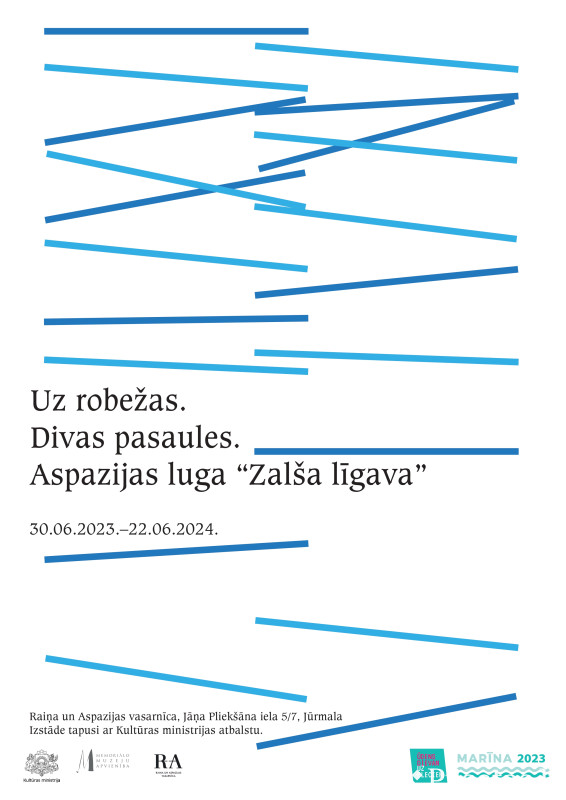
Since June this year, the Rainis and Aspazija Summer House has been hosting the exhibition “Two Worlds. On the Border. Aspazija’s Play “The Serpent’s Bride””, in which research into the creation of the play, its mythological layers, and the idea of the renewal of the world, conducted through collaboration between Astrīda Cīrule, a researcher at the Rainis and Aspazija Museum, and scenographer Reinis Suhanovs, has resulted in a multifaceted artistic interpretation.
In connection with the exhibition and the play, which marked 95 years since its publication in 2023, this year’s annual scholarly presentations at the Rainis and Aspazija Summer House are devoted specifically to this play by Aspazija. “The Serpent’s Bride” is based on Latvian and Lithuanian fairy tales and the myths of the ancient world; moreover, the play’s mythological layers, symbols, and idea of the renewal of the world constitute a broad field for research and lend themselves to multifaceted artistic interpretation. In the play, Aspazija portrays the opposition between two worlds—the simple, realistic, primitive life of the earth and the spiritual world of water. Yet the boundary also marks transition and merging as the two environments come into contact. Aspazija and her protagonist Zaltis wish to unite the upper and lower worlds and create a single world. These ideas are closely connected with the present day, broadening our understanding of nature and its renewal.
The scholarly presentations will bring together researchers of folklore and literature to examine in depth the genealogy of the play’s creation, its sources of inspiration, and its cultural and historical contexts.
Programme of Scholarly Presentations
- The Roots of Greek Myth in Aspazija’s Play “The Serpent’s Bride”.
Dr Ilze Rūmniece (University of Latvia) - The Fairy Tale The Serpent’s Bride in the Context of European Fairy Tales.
Dr Guntis Pakalns (Institute of Literature, Folklore and Art, University of Latvia) - The Serpent in Lithuanian and Latvian Toponymy.
Dr Laimute Balode (University of Latvia) - Cultural and Historical Contexts—Krišjānis Barons, Rainis, Aspazija.
Mg art. Andris Ērglis (Krišjānis Barons Museum) - The Dialectics of Romanticism: The Serpent and His Bride in the Interpretations of J. Lautenbahs and Aspazija.
Dr Ojārs Lāms (University of Latvia) - Aspazija’s “The Serpent’s Bride”—Folklore Research and the Creation of the Play.
Mg art., Mg philol. Astrīda Cīrule (Rainis and Aspazija Museum) - The Alluring and Frightening Water. Contemporary Folklore: People’s Stories.
Mg philol. Zane Grudule (Association of Memorial Museums)
The scholarly presentations and the exhibition “Two Worlds. On the Border. Aspazija’s Play “The Serpent’s Bride” were created with financial support from the Ministry of Culture.