Ieva needs support in living with severe diabetes
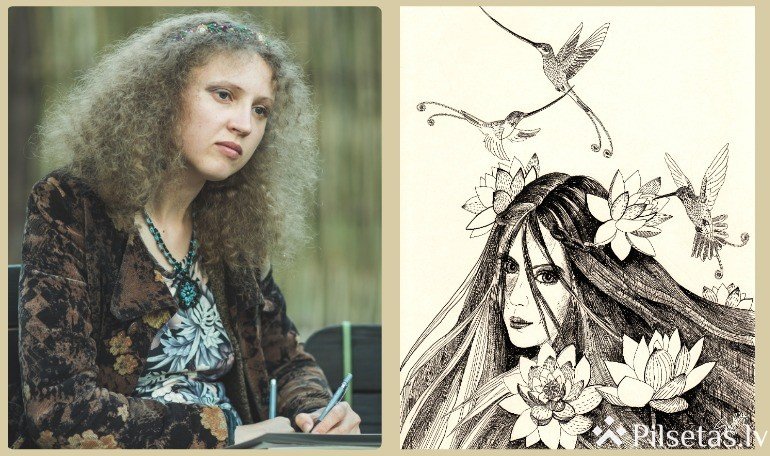
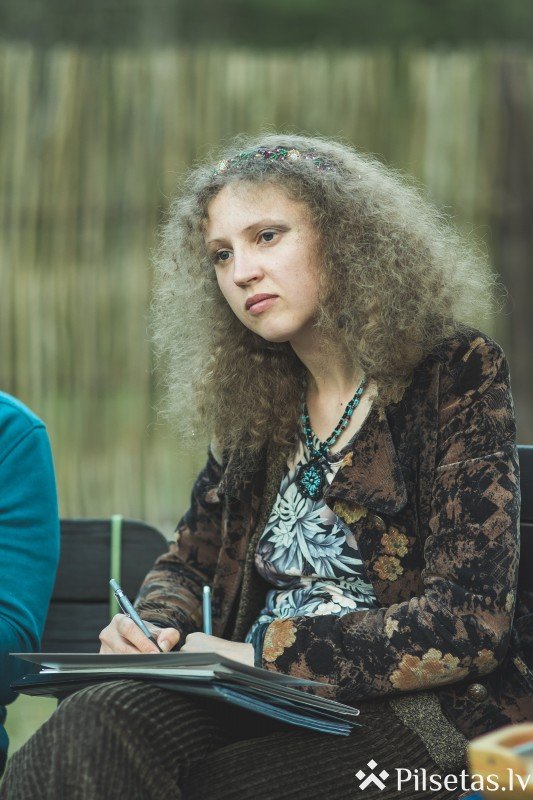
Ieva is a very romantic and gentle woman—an artist and a dreamer. It seems as though she has arrived here from another century. Or stepped out of a fairy-tale book. Among Ieva’s works of art are many illustrations for various fairy tales and legends—a harmonious world in which everything is flawless. Ieva also writes fairy tales herself. Yet when confronted with reality, Ieva, being a modest and shy person, begins to lose her footing. She lives in constant fear that an attack may strike at any moment. That is why she summoned the courage to write a letter to the BeOpen charitable foundation, asking for help. She needs a special device to control severe diabetes.
A donation telephone line is open until 17 December to help Ieva—90006384. One call costs EUR 1.42. The BeOpen charitable foundation has also opened a DONATION ACCOUNT.
Ieva lives in Lielvārde. To ask for help, Ieva had to overcome her own inhibitions. Here is her long-suppressed cry for help:
“I have diabetes—it will soon be 10 years since I have had to live with it. It is painful for me to admit that diabetes is slowly destroying me, because it is impossible to monitor my blood sugar level accurately and continuously. It is especially frightening at night, when I have no idea whether my blood sugar has fallen or risen. That is why my alarm goes off several times during the night, and I get up to take blood samples…
I dream of having a Freestyle Libre 2 device—then I could live more peacefully (it is a device that monitors blood sugar around the clock and signals when the readings rise above or fall below normal). This device costs EUR 1,700 a year. I would very much like to pay for my own treatment—I am ready to paint and draw even more, but I cannot earn enough from it. I live in a small town, and it is difficult to find work here…”
Because of Latvia’s limited state budget, the resources required for diabetes treatment are covered only partially. Insulin is provided in full, while test strips are available with 75% reimbursement—six packs of 50 strips for three months. The state provides 75% support for four measurements a day. However, this is not enough. When measurements are rationed, comas have occurred. Therefore, Ieva measures her blood sugar much more often to avoid comas. That means 9–12 measurements a day. Blood sugar levels can change rapidly. For example, there is the phenomenon known as the dawn phenomenon, when blood glucose levels before bedtime and during the night are close to the target values, but rise above normal in the morning. There may also be nocturnal hypoglycaemia: blood sugar falling below normal, with the situation potentially approaching a coma. To monitor her blood sugar, she has to get up at night. When blood sugar fluctuates outside the normal range, Ieva experiences severe fatigue and weakness. If complications begin, the costs of maintaining her health increase.
Thus, controlling diabetes is becoming increasingly difficult, quality of life is declining, and later even more resources must be invested to treat the complications caused by the disease. This problem could be alleviated if patients had access to the latest solutions for monitoring blood sugar. Doctors worldwide recognise that training patients to monitor the course of their disease themselves, using the latest devices, is the foundation of successful, modern therapy. At present, such devices are not provided in Latvia. The current level of state support in Latvia is insufficient for diabetes patients at increased risk.
The Freestyle Libre 2 device Ieva dreams of is like a home laboratory for performing glucose tests. It helps her respond to changes in blood sugar in time and prevent attacks by sounding and signalling loudly at any time of day or night. For the time being, there is no official FreeStyle Libre representative office in Latvia. This device can only be purchased abroad. It is important to raise awareness of this possibility, because it can help save a life, maintain a normal quality of life and allow a person to live without constant fear.
Ieva’s Blue Bird
... Ieva lives with her father on the outskirts of Lielvārde, in an unfinished house. She is trying to complete it and make it cosy. They do not have enough money to fully finish the interior and renovation. The brick walls are unplastered, but they are decorated with Ieva’s paintings. There are paintings everywhere, and when you enter their home, it feels as though you have entered a fairy-tale land where wonderful flowers bloom, unusual birds live and the sun shines.
Birds are a special and very dear subject for Ieva. She not only draws and embroiders them, but also works as a volunteer ornithologist in an association. “Birds are remarkable creatures,” says Ieva. “People should learn from them how to live here and now, and how to rejoice in life.”
Ieva’s great-great-grandfather was the well-known ornithologist and author of children’s fairy tales Kārlis Grigulis. The bird collection he assembled over many years can be viewed at the Latvian Museum of Natural History. Ieva inherited her love of birds and mythical stories from him. She never met her great-great-grandfather, but her mother told her many stories about him. Ieva remembers that he often said: “Birds must be loved, because by singing they praise God.”
Ieva is a very diligent and hardworking person, and she has many creative ideas. She can quickly sketch portraits and keeps notebooks filled with portraits of different people, created as memories of events. “Yes, I really like sketching and drawing portraits; every person has their own unique beauty,” says Ieva. She gladly shows beautifully embroidered tablecloths and pillowcases, magnets, beeswax candles designed by her featuring the nightjar, and various decorations… Any of these creations would fit perfectly in the salons of Old Riga, but Ieva does not know how or to whom to offer her work. “They did not teach us that at the Academy of Art,” Ieva sighs. If anyone is interested, Ieva would be delighted to collaborate. This would help her pay for her treatment. (To contact Ieva, write to us at zala.lampa@gmail.com.)
Ieva has held several exhibitions and illustrated several books, including children’s textbooks on playing the kokle by her relative Teiksma Jansone, as well as books of poetry by Jānis Lūciņš. However, she does not know how to offer and sell her own work—that requires someone who knows how to do it.
Ieva’s Dreams
Recently, Ieva created a new character—the blue bird (pictured)—a talisman that would bring her good luck every day. She dreams that science and medicine will soon find a solution to make the lives of people with diabetes considerably easier. The Freestyle Libre 2 device is already a huge step in this direction.
…about children…
Of course, Ieva also dreams of a family and children. “However, to be able to give birth to a child, blood sugar must be kept within the range of fluctuations found in a healthy person. With the aforementioned device, this is possible,” Ieva is convinced.
Pregnancy is a much more difficult and complex situation for a woman with diabetes, because the child’s life and health depend on how successfully the pregnant woman manages to keep blood sugar fluctuations under control. During pregnancy, blood sugar levels fluctuate and are even more difficult to predict. Until quite recently, many gynaecologists took the firm position that women with type 1 and type 2 diabetes should not carry a baby to term. However, medicine is advancing; doctors are no longer so categorical on this issue, and an increasing number of women are successfully carrying pregnancies to term and giving birth to healthy children. Even if the mother has diabetes, there is a 98% probability that the baby will be healthy.
…about a harmonious world…
It seems Ieva truly ended up in the wrong place and the wrong century. She would be better suited to living in a fairy-tale forest inhabited by unicorns and fairies. In appearance, she resembles the princess in J. Rozentāls’s painting “The Princess with a Monkey”. Her favourite period of history is the Renaissance. During her studies, Ieva had the opportunity to go to Ferrara as part of the Erasmus programme. Italy has taken deep root in her heart, and Ieva dreams of visiting Florence one day as well. In her view, the modern world should also learn from the Renaissance, when both art and culture flourished and many new inventions were created. “As during the Renaissance,” when wealthy people from the fields of business and economics support and listen to people with creative ideas—then society, too, will be able to grow.
Ieva voluntarily helped friends implement a social project by illustrating the colouring book “The Alphabet of Emotions”—an alphabet of emotions for children in Latvian and Russian. The illustrations explain our emotions so that children can learn to understand themselves and others better.
…about her creative work…
Ieva dreams of participating in art festivals and exhibitions. She wants to illustrate children’s books and fairy tales. To draw comics and greeting cards. To work with clay and laser engraving. To bring beauty into other people’s lives—so that the works she creates, into which she puts so much of her soul, bring joy to people and adorn their homes.
Ieva has experience working at a children’s art school, and she has many ideas about how to work with children more effectively. Today, children are taught to be competitive, but they should be taught cooperation rather than competition. Ieva is convinced that synergy is the main driving force of the process.
Ieva has compiled her illustrations for the myths of various peoples in several albums. At present, she is reading Clarissa Pinkola Estés’s book “Women Who Run with the Wolves”, which describes female archetypes in the mythology of various peoples. The book tells of the inner primal nature of women, guided by instincts full of benevolence, compassion and immeasurable wisdom. Yet “civilised” society has suppressed the essence of women depicted in all the ancient myths. Ieva believes that this essence can and should be reborn in every woman’s soul, even in the conditions of the modern world. Ieva has an idea for creating a series of works dedicated to women.
***
However, Ieva’s greatest dream is the Freestyle Libre 2 device. It is a vital necessity that would allow Ieva to live and work peacefully. It would enable her to overcome her fears of an unpredictable future, when a hypoglycaemia-induced coma or severe complications could occur at any moment.
People with diabetes must constantly check their blood sugar to understand what is happening in their bodies. Ieva’s fingers are covered in puncture marks from the meter needle. By recognising in time the signals that her blood sugar has risen or fallen, she will be able to react more quickly and thus avoid ending up in hospital. The journey from Lielvārde to Stradiņš Hospital in Riga is quite a long one. Diabetes affects practically all organ systems and can reduce both quality of life and life expectancy. Diabetes mellitus is the fifth leading cause of death worldwide, a cause of kidney failure, and also the most common cause of blindness among people aged 20–74.
The only way to stop complications is to prevent blood sugar from fluctuating outside the permissible range (the range of fluctuations in a healthy person). When measuring with test strips, it is impossible to monitor blood sugar in time. Freestyle Libre eliminates the need to prick one’s fingers many times a day and also at night to find out the blood sugar level.
It has been proven that people who are able to keep their blood sugar as close to normal as possible have significantly lower risks of complications associated with diabetes.
“Ieva’s story tells us, harshly and cruelly, that EUR 1,700 is the cost of one year of life in the case of high-risk diabetes. Thus, we are touching upon another area in which we cannot do without the responsiveness of donors. However, we hope that every such story will help ensure that, at least in a few years, state support will also be provided,” notes Ingrīda Šmite, a board member of the BeOpen charitable foundation.
What is Freestyle Libre 2
It is a device for continuously measuring glucose levels, enabling patients to monitor the course of diabetes more effectively themselves and avoid rapid fluctuations in glucose levels. The device consists of a sensor and a reader that displays the readings.
The disposable sensor, attached to the back of the upper arm, determines the precise glucose level for 14 days. After that, a new sensor is needed. If the blood sugar level falls or rises beyond the permitted range, the sensor emits an audible signal or begins to vibrate. The cost of sensors for two years is EUR 3,400, and for three years—EUR 5,100. Three years is the period Ieva needs in order to be safely assured that, with support, she has the time necessary to realise her next dream—starting a family and safely carrying a baby to term.
A charitable telephone line, 90006384, is open for Ieva until 17 December. One call costs EUR 1.42.
The BeOpen charitable foundation has also opened a DONATION ACCOUNT for Ieva; the funds deposited into it will be used to purchase Freestyle Libre 2.
Bank details for transferring a donation:
BeOpen Charitable Foundation
Registration No. 50008218201
Account number: LV59 CBBR 1123 2155 000 10
Payment purpose: Green Light. Assistance for Ieva Jaundaldere.