
Volunteer assistance network created to deliver food to at-risk groups and people in self-isolation or quarantine
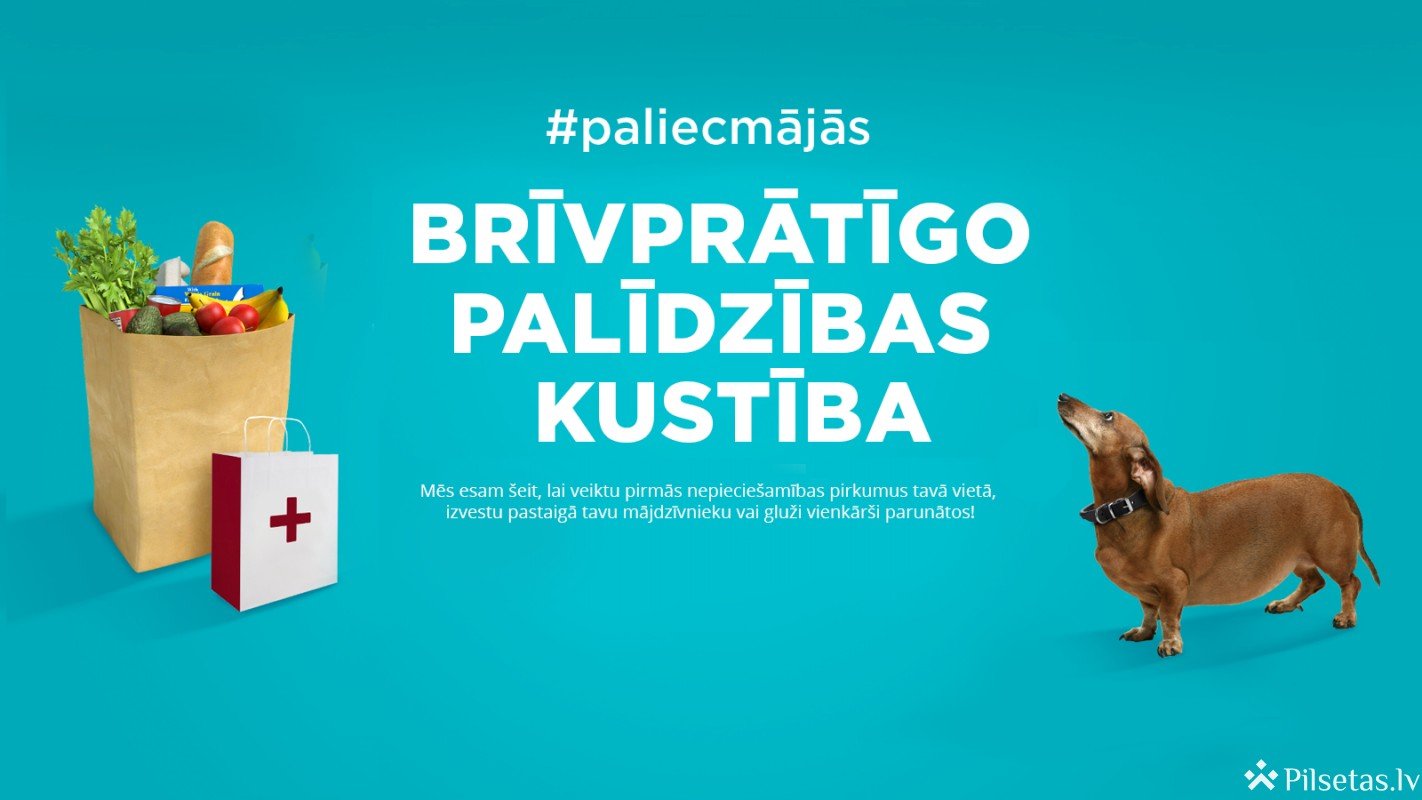
Last week, from 17 to 20 March, the virtual HackForce hackathon took place in Latvia, with the aim of finding solutions to the challenges created by the coronavirus crisis. Among the winners is the #paliecmājās movement—a volunteer network that aims to provide free delivery of food and other goods to people who are at risk or staying at home in quarantine. Anyone can receive assistance from #paliecmājās by calling 25661991 or visiting the website www.paliec-majas.lv.
Since a state of emergency was declared in Latvia, thousands of residents have been in self-isolation and quarantine. Self-isolation is particularly important for older people, as well as for those with chronic illnesses. Even a simple trip to the shop can prove particularly dangerous for these people. People who, after returning from abroad, are required to remain in self-isolation for 14 days but do not have the support of relatives are in an equally critical situation.
To help these people while also protecting other residents from possible infection with Covid-19, #paliecmājās offers volunteer assistance with purchasing and delivering food and household goods, taking pets for walks, and providing emotional support. #paliecmājās specifically invites people who do not use digital technologies and are in a Covid-19 risk group to request assistance by calling 25661991. Neighbours, carers, and social workers are also encouraged to urge people in their communities to call and request assistance.
To provide as much assistance as possible, #paliecmājās invites volunteers who would like to help deliver food and other goods and with other everyday needs to sign up on the movement’s website www.paliec-majas.lv or in the Facebook group. Anyone can sign up, regardless of their location, provided they have not been diagnosed with Covid-19, have not been abroad during the past 14 days, and have not been in contact with a possible Covid-19 patient.
The movement’s website is available in Latvian, and it is currently also being developed in other languages; however, calls in Latvian, Russian, and English are already being accepted.








