
Jelgava school principals and the Education Department submit their school network development action plan to the municipality
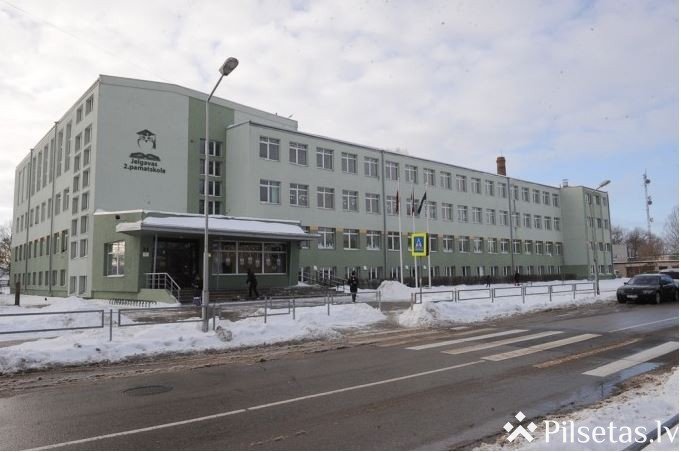
Jelgava school principals and the Education Department have submitted the Sustainable Development Action Plan for the Jelgava City School Network to the municipality. The document was prepared after the heads of 13 educational institutions, together with the Education Department, assessed the city’s Education Development Strategy for 2019–2025, which proposed two scenarios for developing the school network.
All school principals have acknowledged that the school network in Jelgava needs to be reorganised, as the city’s schools currently have almost 1,000 vacant places, the Jelgava Municipal Public Relations Department reports.
The working group included the heads of all 13 general education schools of the Jelgava municipality, as well as the heads of vocational schools. The directors of 12 educational institutions have agreed on a single school network development plan: the Evening (Shift) Secondary School will be incorporated into the Vocational Secondary School; Primary School No. 3 will gradually become a basic school; Basic School No. 2 will be merged with Secondary School No. 6, creating a strong basic school in Pārlielupe; while Spīdola State Gymnasium will continue operating at 2 Sarmas Street.
Although the management of Basic School No. 2 does not object to the reorganisation of the Evening (Shift) Secondary School or the changes at Primary School No. 3, it does not agree to the reorganisation of its own school. Thus, one of the 13 heads of educational institutions does not support the adopted document.
The school network development plan is part of the Education Development Strategy, whose principal aim is to improve the quality of education in the city by defining the development priorities of each school.
The proposed changes at Primary School No. 3 prompted the fewest discussions among the school principals. The school is to be gradually transformed into a basic school. The school principals propose carrying out the reorganisation of the primary school by July this year, which means that, at the end of the current academic year, the school will change its name and become Jelgava Central Basic School. In the summer, the school will begin admitting pupils to Grade 7, and three academic years later the institution will hold its first Grade 9 graduation.
At the same time, the school principals propose changing the name of Jelgava Primary School No. 4. Since, following the reorganisation of Primary School No. 3, Primary School No. 4 would be the only primary school in the city, its name is to be changed to Jelgava Primary School.
The General Education Law stipulates that municipalities must decide by 28 February on the reorganisation, liquidation or renaming of evening (shift) secondary schools. Like the authors of the Education Development Strategy, Jelgava’s school principals also agree that the most effective way to ensure the further operation of the evening school in the city would be to incorporate it into the Vocational Secondary School.
The document submitted to the municipality provides that Jelgava Evening (Shift) Secondary School is to be reorganised by July this year, and from 1 September of the next academic year all the school’s pupils will continue their studies at Jelgava Vocational Secondary School, which will offer basic and secondary education programmes in evening or extramural form.
During the two weeks since the Education Development Strategy was presented, the most discussion has concerned the future operation of the city’s minority-language schools—Secondary School No. 6, Basic School No. 2 and Secondary School No. 5. However, the majority of school principals have no doubt about the most effective and sustainable development option for the city’s minority-language schools, taking into account the demand for education in these programmes.
With the exception of the management of Basic School No. 2, everyone supported the option of retaining minority-language education programmes in both parts of the city—in Pārlielupe and in the city centre. In agreeing on this development plan, the school principals analysed in detail how to carry out the process most effectively in order to provide maximum support to the pupils of Basic School No. 2, who will be affected by the greatest changes when the institution is merged with Secondary School No. 6.
Basic School No. 2 and Secondary School No. 6 are expected to be merged after the end of this academic year, but each parent will be able to choose which educational institution in the city their child will attend in the future.
To make the transition as easy as possible for the younger pupils of Basic School No. 2 and ensure that a school is available closer to their homes, Secondary School No. 5 is expected to be ready to accept all pupils in Grades 1–3 together with their respective class teachers. The school’s pupils who will be in Grade 9 next academic year will also be offered a choice of Secondary School No. 5 or No. 6 and the opportunity to transfer there together with their entire class and class teacher.
The changes will also affect Secondary School No. 6, which will not only be ready to accept pupils from Basic School No. 2 but will also gradually become a basic school. However, to ensure that this process is not rushed, the school is not expected to admit Grade 10 pupils from the next academic year, while pupils in Grades 11 and 12 will retain the opportunity to complete secondary school at their current educational institution. This proposal was assessed in view of the fact that Secondary School No. 6 offers secondary vocational education programmes that Secondary School No. 5 cannot offer to its secondary-school pupils.
The school network development plan provides for Spīdola State Gymnasium to move to the building at 2 Sarmas Street this summer and offer the opportunity to study there to the pupils in Grades 6 and 7 of Basic School No. 2 who wish to do so. Instruction will be in Latvian. In the longer term, Spīdola State Gymnasium will become a full-cycle gymnasium, admitting pupils to Grade 1.
Although the Education Development Strategy proposal envisaged admitting pupils to Grade 1 when the school moved to a new building, the vision of the heads of the educational institutions is that this step should not be rushed and should be introduced together with another innovation—the opportunity to study the International Baccalaureate programme. To prepare for the introduction of the International Baccalaureate programme, the school must learn the programme’s methodology and then undergo certification, which is a time-consuming process. The plan’s authors believe that introducing both changes at the same time will benefit the pupils.
The Sustainable Development Action Plan for the Jelgava City School Network proposed by the heads of the educational institutions and the Education Department has now been submitted to the municipality, and in-person meetings with pupils’ parents and teachers are under way.
Meanwhile, the municipality will prepare a draft decision on the development of the city’s school network, which will have to be considered by the deputies of the Jelgava City Council—first at the council committee meetings in February, with the final decision to be adopted at the Jelgava City Council meeting on 28 February.








