
What Are the 7 Wonders of the World?
Have you ever wondered what the 7 wonders of the world are? Over the years, many different lists of the wonders of the world have been compiled. The most famous list was called the "Seven Wonders of the Ancient World". Many of these ancient wonders have been lost, and of the original seven, only the Pyramids of Giza have survived. However, in 2000, a campaign was launched to determine the 7 modern wonders of the world from a list of 200 candidate sites around the world. Over the following seven years, 600 million votes from around the world helped create a list containing just 21 wonders of the world.
Finally, the new 7 wonders of the world were determined, and every year on July 7, the Day of the 7 Wonders of the World is celebrated. These 7 modern wonders of the world are a remarkable group because ordinary people from around the world voted for them. Including those who play Sloti.
1. Machu Picchu, Peru
The mythical Machu Picchu is located in the Andes Mountains, 2,430 metres above sea level in Peru's Cusco Region. Machu Picchu is an ancient Inca settlement listed among the "must-see attractions" and is the most visited attraction in the country. The impressive size and location of these ancient ruins make them a wonder of the world. Many have speculated about Machu Picchu's original purpose since Hiram Bingham rediscovered the lost city in 1911. Some believe that it served as a ceremonial site, a military fortress, or a refuge for Inca nobles. Originally built in the 15th century, Machu Picchu has been exceptionally well preserved thanks to the skill of Inca engineers. Visiting Machu Picchu, which consists of temples, plazas, terraces, and walls, is like travelling back in time. Machu Picchu is one of the most impressive of the 7 wonders of the world.
2. Chichén Itzá, Mexico
The ancient Mayan city of Chichén Itzá is another wonder of the world in South America. It is located on the Yucatán Peninsula and is a popular day-trip destination from the beach resorts of the Riviera Maya. It is an important tourist attraction as well as an active archaeological site. New discoveries about Mayan culture are regularly made here. Chichén Itzá is believed to have been built around the 4th or 5th century, and it quickly became an important centre of Mayan culture.
When visiting Chichén Itzá, the main attraction is a huge pyramid known as El Castillo. The pyramid once served as a temple dedicated to the Mayan deity Kukulkan. Its impressive stepped design is an example of the Mayans' remarkable engineering skills.
3. Colosseum, Italy
The Colosseum is located in Rome, and its impressive silhouette is recognised throughout the world. Almost 2,000 years old, the Colosseum is well preserved and is Italy's most important tourist attraction. The amphitheatre was completed in AD 80 and hosted various events, including the terrifying gladiatorial contests of the Roman era. It was known as the Flavian Amphitheatre and held up to 50,000 spectators. To celebrate the completion of the Colosseum, Emperor Titus declared 100 days of games. During these 100 days, more than 2,000 gladiators met a brutal fate. Today, the Colosseum receives approximately 6 million visitors each year. The Colosseum is the only wonder of the world in Europe.
4. Petra, Jordan
Petra is one of the oldest of the 7 wonders of the world, located in the heart of the desert in southwestern Jordan. Carved into the face of a rose-coloured sandstone cliff, the site was once the capital of the ancient Nabataean Kingdom. The site was brought into the spotlight by its appearance in the Indiana Jones film "The Last Crusade". Petra was a thriving trading centre and the capital of the Nabataeans from 400 BC to AD 106. Eventually, the city was abandoned and stood empty until it was rediscovered in the early 1800s.
Other notable structures to see when touring Petra include the Monastery, the Great Temple, and the theatre. Interestingly, archaeologists suspect that only a small part of the original city has been uncovered so far.
5. Great Wall of China, China
The Great Wall of China is the largest wonder of the world, visible from space, and stretches for more than 20,000 km. Moreover, it is the longest human-made structure on Earth. Construction began in the 7th century BC, and over the years this defensive wall was extended several times. Altogether, the Great Wall of China consists of 19 different walls. The various sections demonstrate the development of construction methods and styles. Parts of the Great Wall extend as far as the Russian border and the Gobi Desert in Mongolia, and construction of the wall did not end until the 19th century.
Beijing is considered the gateway to the Great Wall. The most popular sections, such as Jinshanling, Juyongguan, and Jiankou, are located near the capital. These sections were built during the Ming dynasty and are well preserved, although they can become crowded during peak visiting hours.
6. Christ the Redeemer, Brazil
Christ the Redeemer rises high above the Rio de Janeiro skyline atop Corcovado Mountain. Christ the Redeemer was created over nine years by several sculptors. It was unveiled in 1931. This monumental statue is 30 metres high and 28 metres wide, and it bears witness to Brazil's religious heritage. Christ the Redeemer can be seen from almost anywhere in the city and is an omnipresent cultural icon. The statue has a unique design: from a distance, it looks like an ordinary cross, but up close, the delicate features reveal the face of Jesus Christ.
Visiting Christ the Redeemer is a popular attraction in Rio de Janeiro, and most visitors take a 20-minute train ride to the summit. The statue stands on an 8-metre-high pedestal containing a small chapel dedicated to Our Lady of Aparecida. Services are held in the chapel every day, and it can also be used for weddings and baptisms. At night, the statue is illuminated, transforming into a beam of light above Rio de Janeiro.
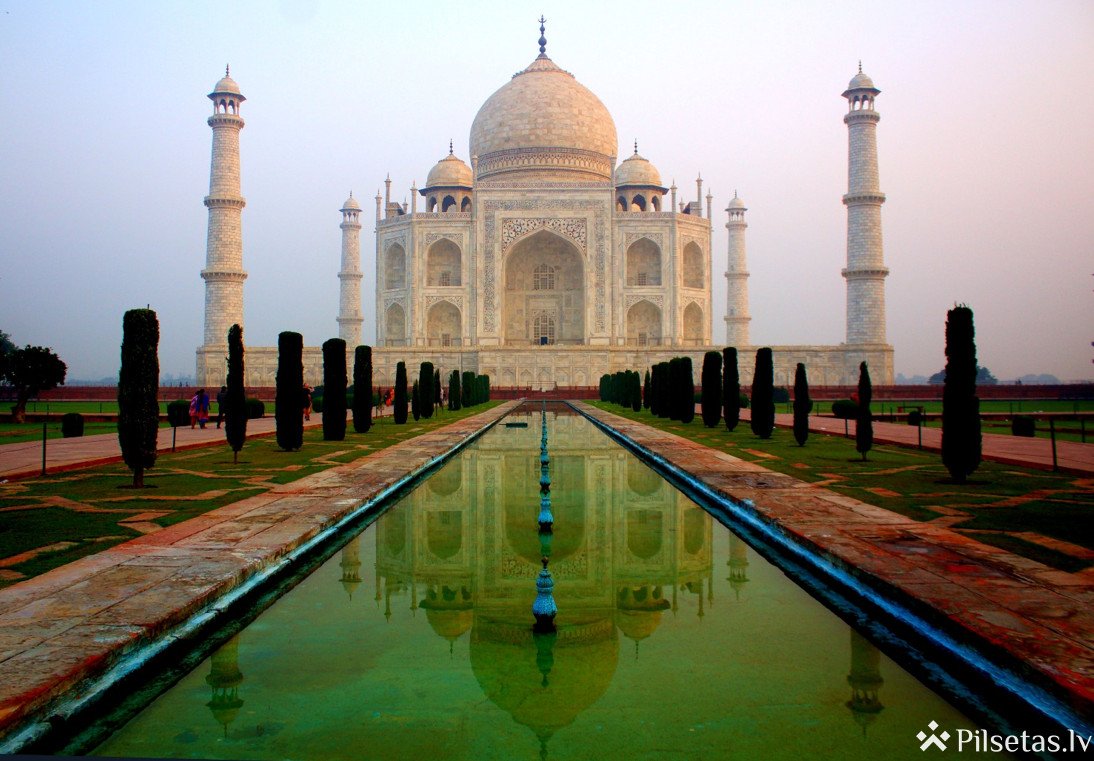
7. Taj Mahal, India
The Taj Mahal is located in the city of Agra on the southern bank of the Yamuna River and is a universal symbol of love. This immense white marble mausoleum was built by Emperor Shah Jahan after his beloved wife tragically died in childbirth in 1631. The site symbolises his grief and devotion and has won the hearts of millions of visitors. The most skilled craftsmen in the Mughal Empire were hired to create this luxurious structure, which is also the final resting place of the shah himself.
The Taj Mahal is India's most popular tourist attraction, so it is no surprise that it made the list of the New 7 Wonders. If you visit the Taj Mahal, we recommend arriving early in the morning to enjoy the ornamental gardens before the crowds arrive. Free casino games also recommend playing them in advance so that they do not disappear.








