
Kuldīga introduces a “catch–neuter–release” programme to address the issue of stray animals
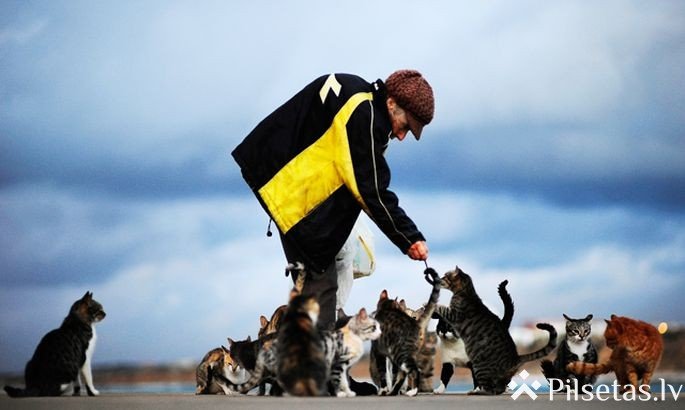
On 11 February, a meeting was held at the Kuldīga Municipality to discuss further action regarding stray animals. Veterinarians, municipal specialists, municipal police representatives, activists from non-governmental organisations and other interested parties were invited to attend. It was decided that an animal shelter should be located in Kuldīga. The municipality will also introduce the “catch–neuter–release” programme, provide more public education on taking responsibility for animals, and implement other improvements to address the issue of stray animals.
Several veterinarians practising in Kuldīga attended the meeting and expressed their views. Representatives of the animal protection association “Dzīvnieku SOS” were also present; they offered their proposals and cooperation in successfully resolving the situation. Inga Bērziņa, Chairwoman of the Kuldīga Municipality Council, thanked everyone for taking part in the discussion of this pressing issue and presented proposals for improving the situation. First and foremost, discussions on the subject had made it clear that the animal shelter should be located in Kuldīga. A decision on whether its operations would be overseen by an association, a commercial entity or the municipality will be discussed and made later, so that the issue can be resolved as quickly as possible. It was suggested that the shelter should be larger than the one that previously operated in Kuldīga.
The “catch–neuter–release” programme has also already been launched; it will help stop the uncontrolled breeding of stray cats. At the same time, I. Bērziņa emphasised that it was important to understand what happens to neutered cats after they are released back into the environment and who will care for them thereafter. The workload of local veterinarians and their capacity to neuter cats are also pressing issues. Therefore, in the near future, the Council leadership will invite veterinarians practising in the municipality to another discussion to consider how to implement this programme successfully.
Those attending had differing views on the so-called cat colonies—stray cats that are fed by someone. One resident complained that cats living in the basements of buildings soiled them to such an extent that it was unpleasant to enter the basement because of the smell. Another resident objected, pointing out that if the basement cats were neutered, they would not soil the basements; moreover, they helped control the breeding of mice and rats, which would otherwise destroy stocks of fruit and vegetables stored in the basement.
Veterinarian Olārs Obodņikovs emphasised that cats and dogs must be identifiable and that every animal must have an owner. He drew attention to the fact that many people deliberately ignore the obligations imposed on animal owners by law, noting that in other European countries it would be inconceivable for owners to disregard the requirement to microchip or neuter their animals. He expressed the view that animal owners should be fined for ignoring legal requirements. He also urged people to consider how quickly unneutered cats reproduce, producing offspring that no one needs. In his opinion, the goal should be to eliminate entirely ownerless animals living somewhere on the streets or in basements. At the meeting, I. Bērziņa informed those present that the municipality planned to work more actively with the public, educating people about animal owners’ duties and responsibilities and explaining how they should act when they see a stray or helpless animal. The procedure for reporting such animals is also an important issue: is a telephone call to the municipal police, as is currently the case, sufficient, or is a written report required—if not on paper, then at least by email, as in other municipalities?
To establish detailed procedures for dealing with stray animals and to introduce the “catch–neuter–release” programme, municipal specialists will prepare new binding regulations in the near future and submit them for approval at a meeting of the Kuldīga Municipality Council. The issue of a fee for keeping dogs or cats was also discussed—there is currently no such fee in Kuldīga. One resident said that she would be willing to pay a fee for keeping a dog if she knew that the money she paid would be used, for example, to educate dog owners and provide dog training or to create dog-walking areas. It was also discussed that many dog owners fail to clean up after their pets and are very dissatisfied when someone points this out to them.








