Characteristic Latgale Towel Patterns Compiled in a Digital Booklet
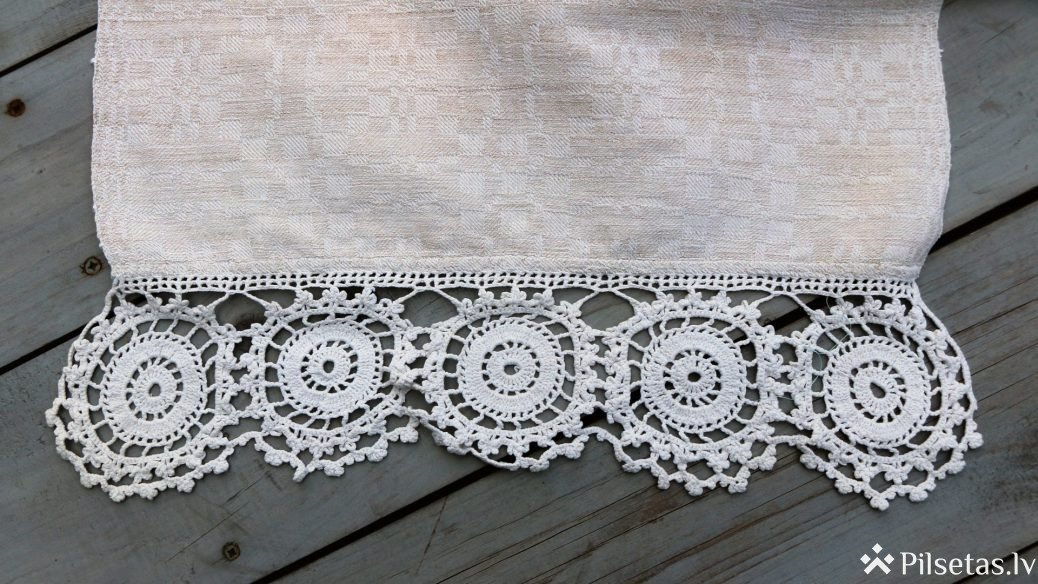
The “Towel Patterns” project implemented by Rēzekne Secondary School of Art and Design (RMDV) has been completed. During the project, towels woven in Latgale were studied as a component of traditional cultural heritage, resulting in the creation of educational digital material compiling 20 towel patterns characteristic of Latgale, fabric-setting diagrams, and photographs. This digital booklet will be useful to handicraft makers who will be able to produce similar traditional towels using the technical drawings. The extensive material can be viewed and downloaded at http://rmdv.lv/wp-content/uploads/2022/09/Projekts_Dvieli.pdf .
During the project, teachers and students of the Textile Product Design programme went on five expeditions to photograph towels, describe their technical parameters, draw sketches, and listen to stories about when the towels had been made—something that undoubtedly left a significant mark on the result.
After the expeditions, technical patterns were drawn from the photographs and the towel compositions were analysed. As project manager Inese Ratniece explained, the towel compositions do not always correspond to the principles of composition taught at school: “The arrangement of the pattern often lacks border sections, and symmetry was not always observed in the placement of the pattern motifs. Most likely, this was because the women who made the fabrics had not learned techniques for adapting patterns; perhaps the towel’s functionality was more important, while its decorative significance was less so.”
It should be noted that quite a number of more ornate towels have also survived in Latgale. Judging by the complexity of their patterns, they were most likely woven on Vīlumsons looms in the first half of the 20th century.
The project team expresses its gratitude to the custodians of the towel collections for the opportunity to study their treasures: bathhouse attendants Gita Usāne and Nellija Kiščenko, the Indra Weavers’ Group, the Ludza Crafts Centre, the “Dzīpariņš” Folk Applied Art Studio, the Baltinava Museum, and RMDV graduate Iveta Gabrāne.
The project was implemented with financial support from the State Culture Capital Foundation.