A Window-Cleaning Robot for Your Home
It is hard to find many people who enjoy washing windows. The process is time-consuming and labor-intensive, especially when it comes to modern panoramic windows. What is more, properly wiping away dust and the drops left by snow and rain also requires skill. Not to mention the danger faced by residents of the highest floors. For all these reasons, most people only turn to window cleaning once or twice a year, when there is simply “no way out.” A lack of time in the daily rush also plays a role. One of the most useful recent innovations on the household-appliance market solves this problem—the window-cleaning robot. With such a device, you will be able to clean glass much more often, essentially whenever necessary: when it has become dusty or a heavy downpour has left its marks. As a result, you will enjoy a tidier, brighter, and cozier home not only after spring cleaning, but every day.
Does the robot really clean independently and effectively?
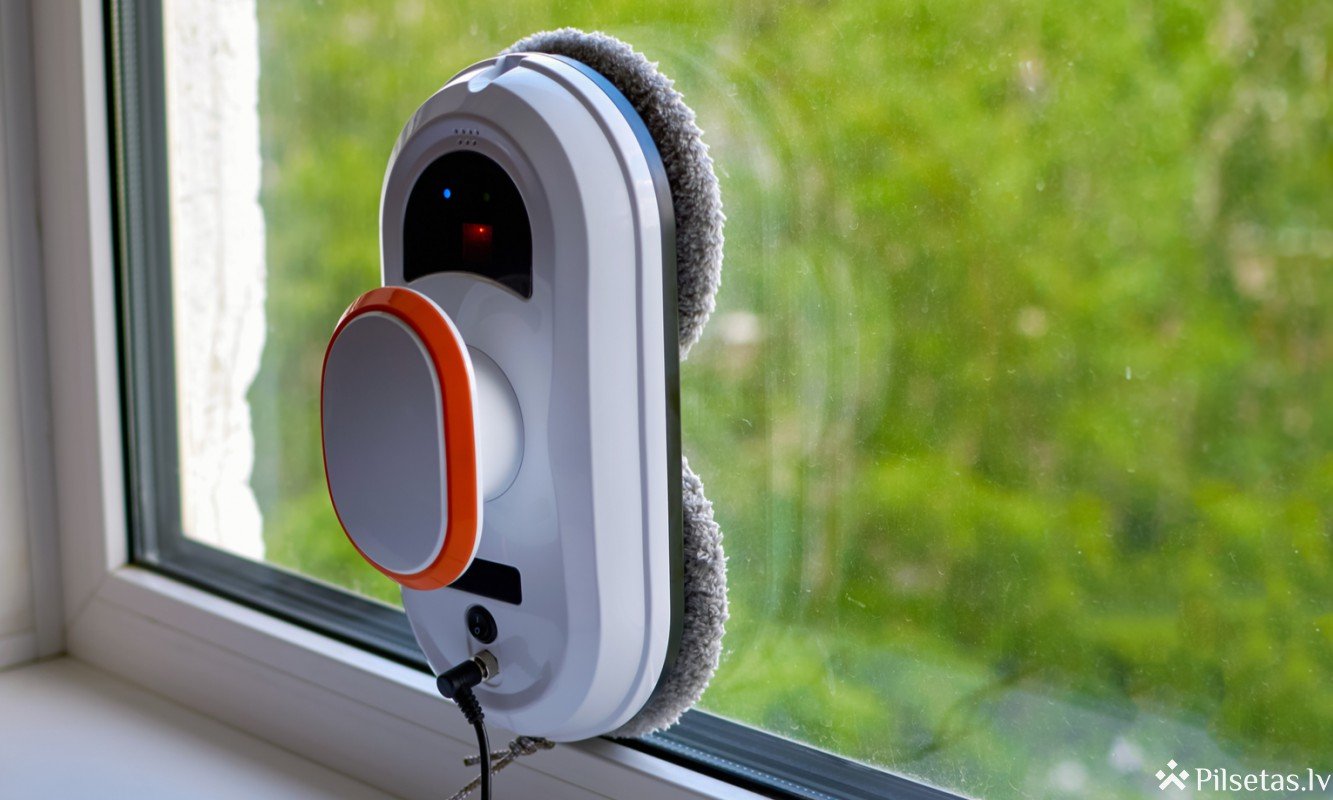
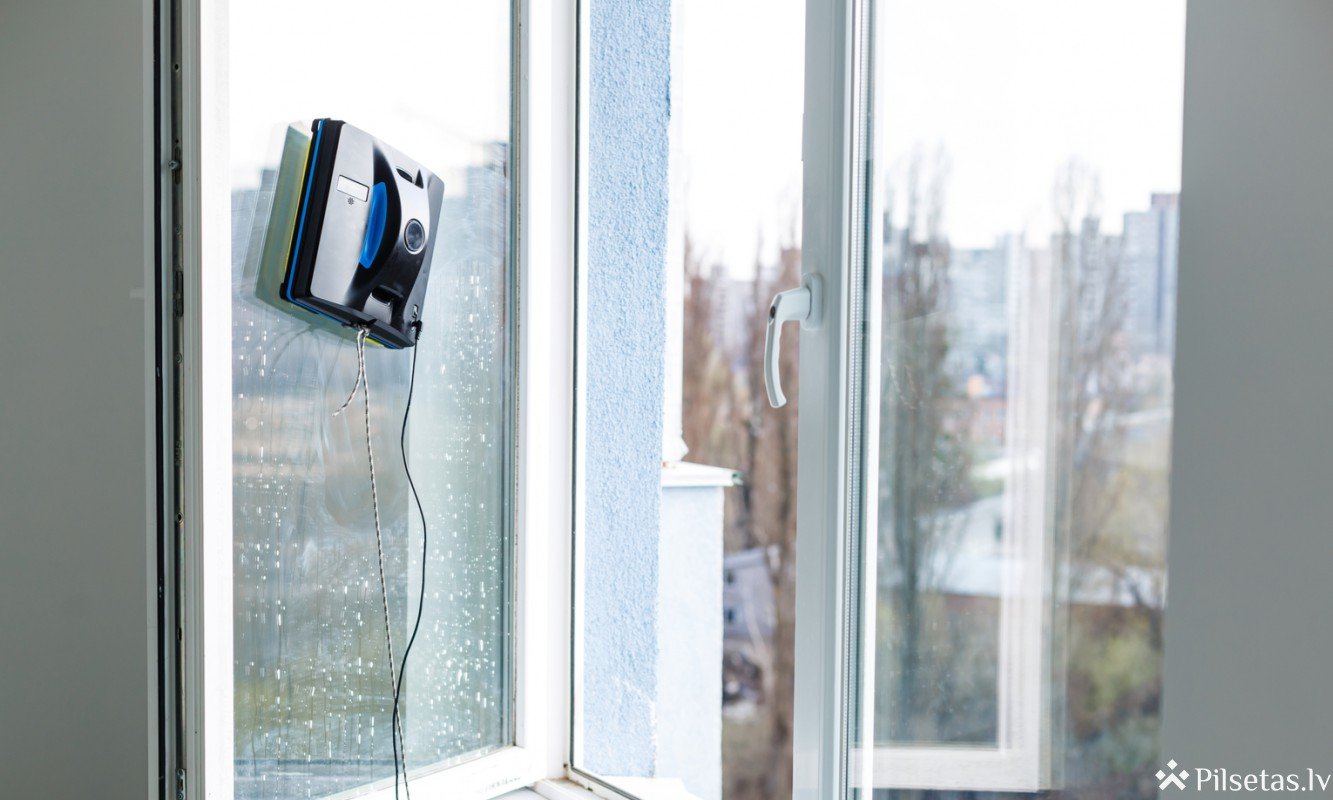
A robotic window cleaner moves independently across a glass surface, without user involvement. Its operating principle resembles manual work—as it moves, the device imitates human movements when washing windows, until the glass becomes clean and acquires an attractive shine.
You will still need to do a few things, however. First, you need to prepare the device for operation. You will need to moisten the microfiber cloth with cleaning solution or pour the solution into the robot’s special reservoir, depending on the model, attach the cloth to the robot, place the device on the window, and start it. Microfiber cloths are already included in the package, and some manufacturers also include special cleaning solutions. In practice, however, you can use any cleaning product of your choice—glass cleaner, universal cleaner, and so on. The exception is when this is not permitted by the warranty terms. After the cleaning session, you will still need to wipe the corners of the window, as the cleaner cannot reach them because of its design. Overall, these preparation and corner-cleaning tasks take only a few minutes.
How do the design and shape characteristics of robots affect their performance?
If you have decided to buy a robotic cleaner and have already examined the available options, you will certainly have noticed how diverse the range is. First and foremost, you need to choose the required cleaner design and shape, as the device’s capabilities depend on them.
By design, robots are divided into magnetic and vacuum models. The former are attached to both sides of the glass using magnets. Such cleaners are highly effective, but have limited applications—window cleaning only. You must also check what glass thickness the device is designed for. Most commonly, the operating range is from 5 to 28 mm. In practice, this means that such a design will not be suitable for all windows. For example, the thickness of double-chamber insulating glass units is usually 32 mm, so the robot will not stay attached to such a window. Vacuum models are more versatile in this respect and, accordingly, more in demand. They are made even more popular by another important advantage: the device can be used not only for cleaning windows, but also mirrors, table surfaces, wall tiles, sliding glass doors and other glass, mirrored, and smooth surfaces.
As for the shape of the robots, it does not affect the quality of cleaning. The differences can be seen only in operating speed and, consequently, productivity. Square devices are slightly faster. They are therefore more suitable for owners of panoramic windows, glazed doors, and large residential buildings or commercial premises. If you have a small apartment, a lighter and more compact oval or round device will be more convenient to use.
What else should you pay attention to?
To ensure that using your newly purchased device fully meets your expectations, assess several other important technical parameters.
· Operating speed. The question of how quickly you will be able to clean your windows is especially relevant if there are many of them or they are large. If the device can clean 1 m2 in 2–4 minutes, this is a good productivity indicator that satisfies most buyers.
· Additional function—dry cleaning. It is not available on all robots, but it is very useful around the home. Special microfiber cloths for dry cleaning will first of all help you deal more effectively with very dirty surfaces. In this case, you should run the dry-cleaning cycle first to remove the largest dirt particles, followed by washing. On some cleaner models, dry and wet cleaning are combined in a single operating cycle, which is the most convenient option in practice. Secondly, you can use dry cleaning to polish surfaces. This allows you to bring not only windows but also other mirrored, glass, and glossy surfaces to a shine, including those with a fine texture, such as lacquered wooden furniture or mirrors.
· Number of modes. In general, the more modes the device has, the better the result will match your needs. For example, the spot-cleaning mode is useful if you want to polish a particular surface to a shine, while the intensive program is intended for very dirty surfaces. Sensors—including obstacle, glass-edge, and height-change sensors—help maintain a high standard of cleaning and ensure the device’s long service life. For example, if you intend to clean frameless structures, a sensor that detects an approaching edge will prevent the device from falling and “tell” it to move back.
· Controls. Simpler models are operated using buttons on the device’s panel, more advanced models with a remote control, and the most modern models with both a remote control and a smartphone. The latter method allows you to start the device remotely, set the operating mode, monitor the process, receive safety alerts, and more.
In conclusion, it should be noted that the robot’s seemingly high price pays off through many years of service, a tidier environment, and a freer and more pleasant daily life. If you would like to buy one at a better price, visit the 220.lv online store—https://220.lv/lv/tv-un-sadzives-tehnika/saimniecibai/logu-tiritaji/f/all/logu-mazgasanas-roboti
There, at good prices, you will be able to choose a window-cleaning robot with the cleaning functions, control options, and operating speed best suited to your needs. The online store’s selection also includes window cleaners from manufacturers highly rated by buyers, including Ecovacs, Xiaomi, Cecotec, Hobot, Mamibot, Liectroux, and others. Take this opportunity to “entrust” some of your household duties to high-tech equipment while you spend your time on much more enjoyable activities!