Future offices will have to offer more than workspaces
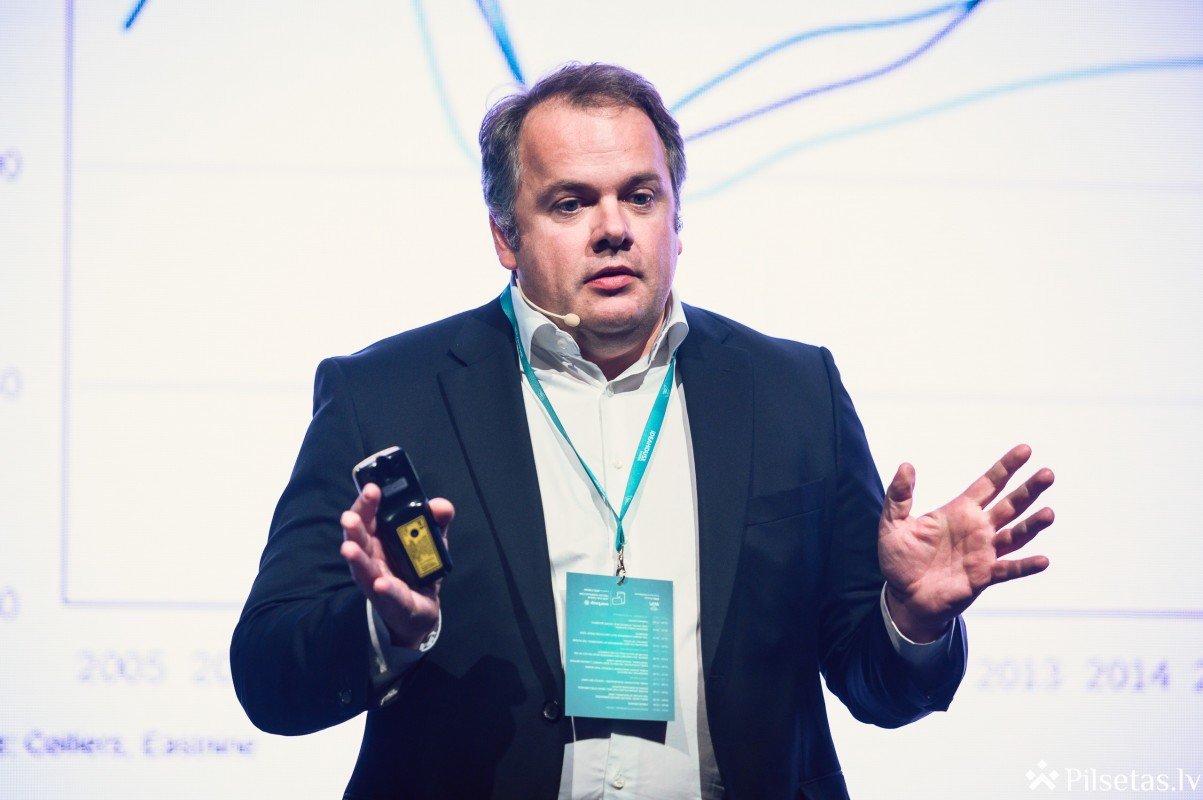
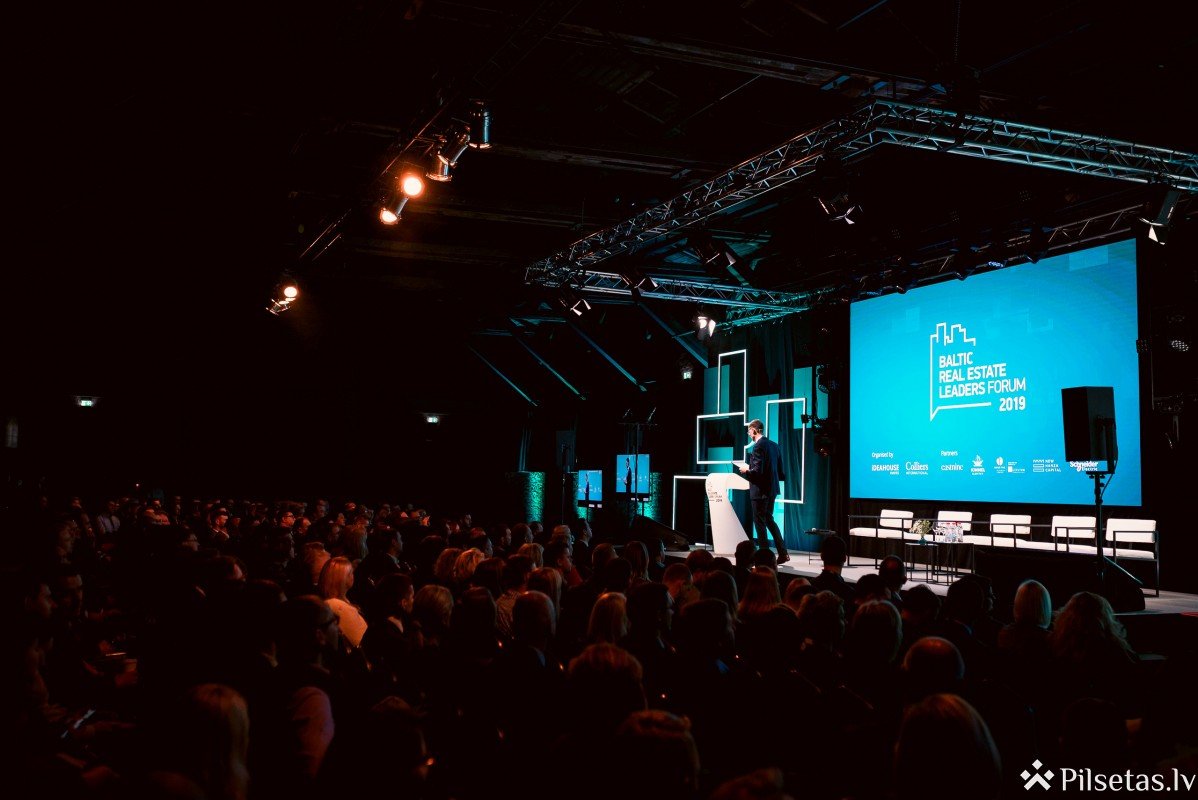
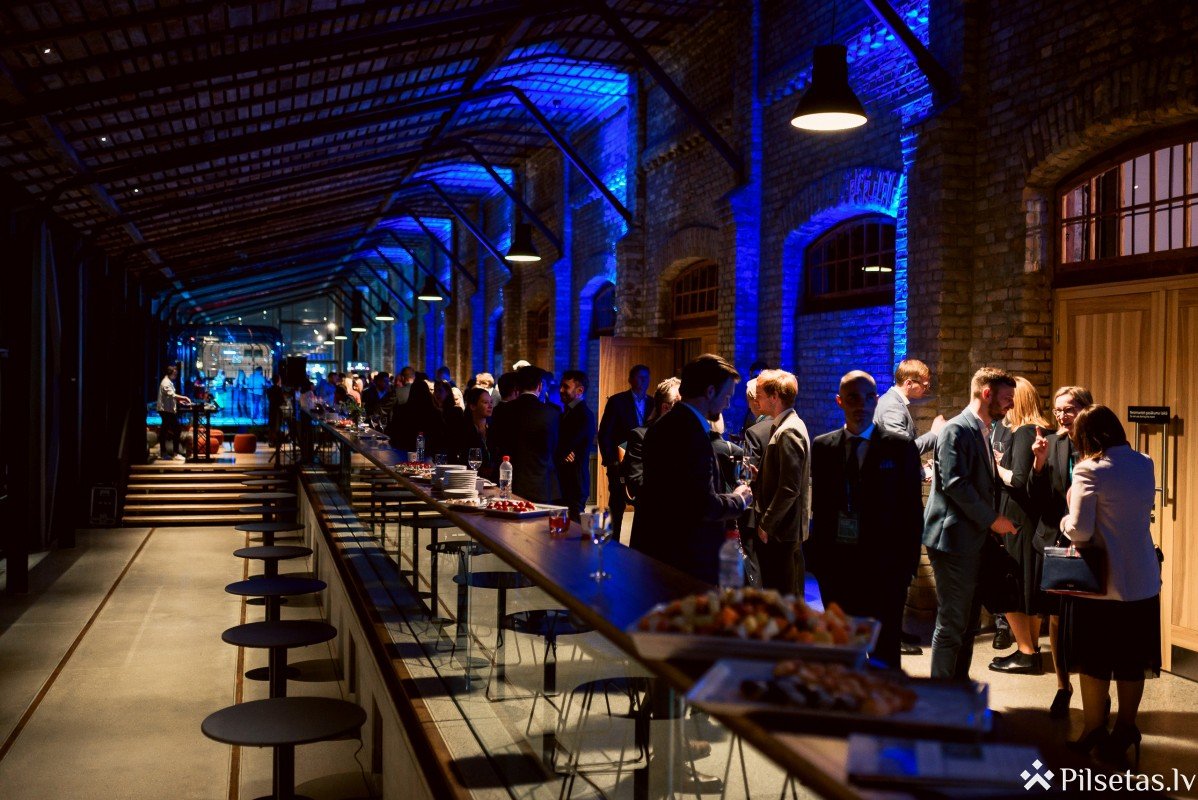
The office is becoming an important tool for attracting employees and is no longer merely a workspace, but also a place to socialise and have fun. Real estate developers in the Baltic states will also have to take this into account if they wish to continue operating successfully in this business, warned experienced industry professional Kestutis Sasnauskas, CEO of Eastnine, at the Baltic Real Estate Leaders (BREL) real estate forum held in Riga on Friday.
The commercial space letting sector is greatly affected by the entry of the new generation into the labour market and their assumption of leadership positions. These people were entertained more during childhood than their parents and grandparents, and therefore expect work to offer not only the opportunity to work, but also to spend their time pleasantly. To meet the demands of the workforce, company offices will begin returning from the outskirts to city centres, where social life is more active, and the workspace itself will be less important than the range of additional services on offer. Building owners must also reckon with shorter leases, as tenants want flexible terms and perceive premises as a service rather than a permanent home, Ķ. Sasnausks said at the conference. This means that landlords will have to work actively to attract clients and try to accommodate their wishes, receiving less money in return, because the era of easy profits is over.
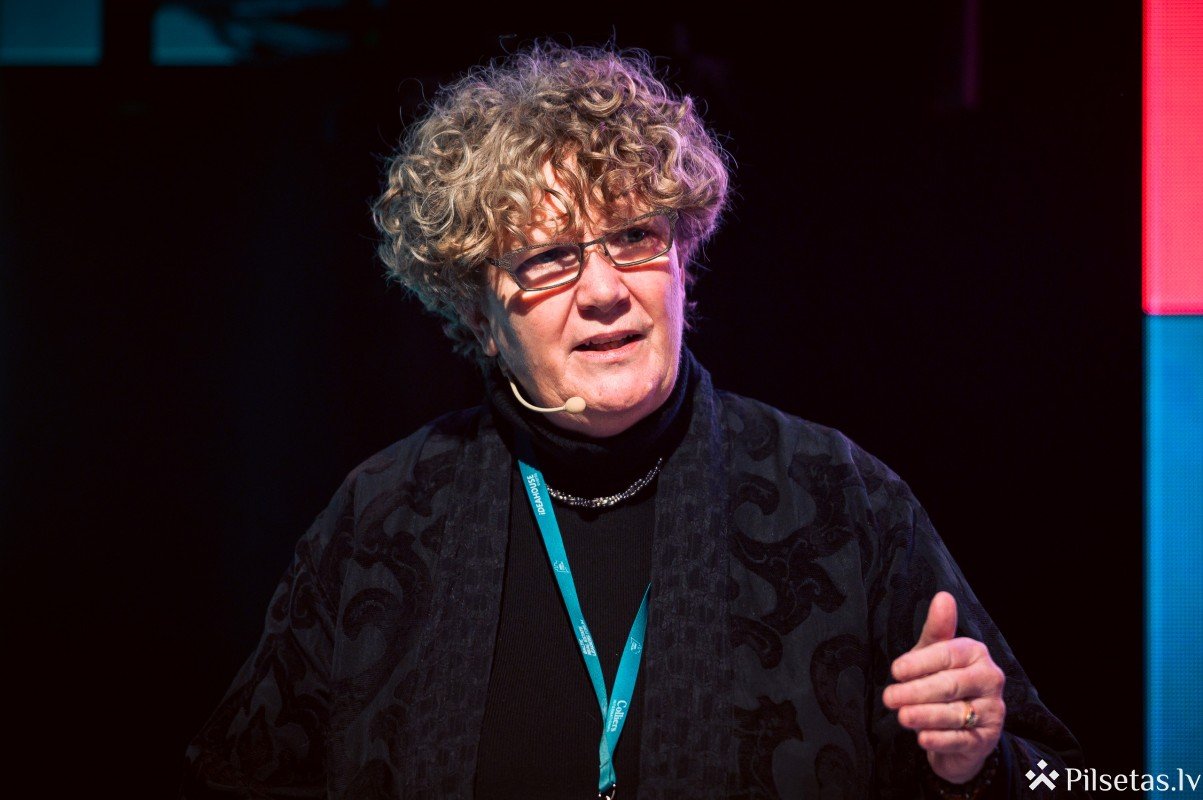
Meanwhile, Kirsten Ritchie, sustainability ambassador at the international company Gensler, emphasises that next-generation buildings must play an important role in slowing climate change and promoting a healthier lifestyle. To achieve this, it will be necessary not only to construct energy-efficient and more environmentally friendly buildings, but also to plan the use of space carefully so that cities do not grow into vast monsters in which reaching the workplace takes several hours.
The most modern buildings of today, constructed as offices for the world’s wealthiest companies, are environmentally friendly, can generate their own electricity and heat, and encourage people to move around through their layouts and the placement of staircases. In the future, an increasing number of buildings, including residential buildings, will be constructed in this way, K. Ritchie believes. Photovoltaic panels integrated into walls and roofs will increasingly be used to generate electricity and provide heating; radiators will be replaced by underfloor heating, which warms rooms more efficiently; and various smart technologies will ensure minimal consumption of water and other resources. Some Gensler designed buildings already use more than 1,500 different sensors that measure room temperature and light levels, determine the number of people present, and automatically adjust heating or cooling systems accordingly. In buildings with large glass windows, self-tinting windows, which respond to the intensity of sunlight and prevent it from dazzling office workers while ensuring that an optimal amount of natural light enters the room, will become more widely used.
Environmental improvements will promote more productive work. For example, studies show that bringing fresh air into an office increases work efficiency by 11%, while bringing nature indoors increases employees’ ability to solve problems creatively by 50%.
Speaking about the future of the working environment, WeWork Director of Real Estate Management Salman Saeed emphasised that it will undergo fundamental changes as early as the next decade. The workspace will become diverse and multifunctional, and the individual workstation will gradually disappear. Employees will move around the space and work in the place most suitable for the task at hand – in a coworking space for joint projects, in an enclosed booth for conference calls or intensive work, or in a multifunctional room for events. Specialised meeting rooms will be replaced by a more informal environment – cafés or lounges with pleasant, relaxing furnishings. Workstations in coworking spaces will no longer be separated by walls in order to encourage communication among employees. S. Saeed claims that in the WeWork office, where these principles are already being applied, work efficiency has increased 2.5 times.
Since 70% of the world’s population will live in cities by the middle of the century, it is already critically important to use all office buildings as efficiently as possible so that as many people as possible can work in them. Otherwise, cities will expand rapidly, creating new logistical challenges and, consequently, new challenges related to global warming.
Other inspiring speakers also addressed the BREL forum. Spacescape CEO Alexander Ståhle spoke about the values of future urban environments in Northern Europe, Colliers San Francisco Vice President Anna Natunevich analysed the next generation of consumers, and Empathic Building founder Tomi Teiko addressed one of the most globally relevant topics today: how the digital world is changing the real estate business.
The forum is organised by Colliers International and iDEA HOUSE events.
Forum partners – Eastnine, Origo One, developed by Linstow Center Mangement, Kimmel Quarter, New Hanza Capital, Schneider Electric.
Session supporter – Merks.
ABOUT COLLIERS INTERNATIONAL: Colliers International Group Inc. (Nasdaq:CIGI) (TSX:CIG) is an international commercial real estate (CRE) consultancy with 400 offices in 69 countries worldwide. Colliers International employs more than 15,400 real estate professionals and brokers. The company has operated in the Baltics since 2004, providing clients with a full range of services – from comprehensive real estate concept development, investment advice and corporate services to project supervision, valuation, property management and brokerage services.