
Water level in the Lielupe rose by 21 centimetres overnight; slush ice has formed
Published: 02.03.2021
Add Events
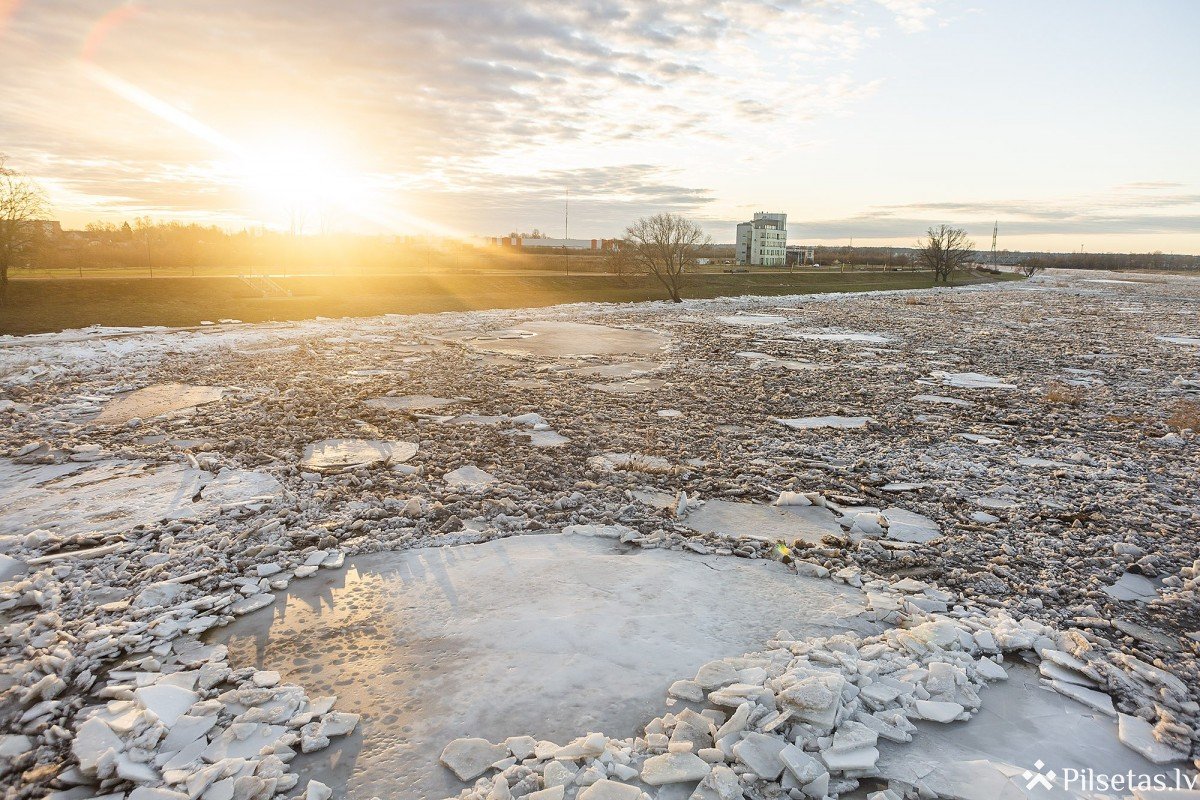
The Jelgava Municipal Operational Information Centre (POIC) reports that slush ice has formed in the Lielupe within the city and that the water level has risen by 61 centimetres over the past 24 hours, reaching 1.47 metres. In the Svēte, however, the water level has risen by five centimetres since Monday evening, reaching 1.66 metres.
POIC director Gints Reinsons explains that the risk of low-lying areas flooding arises if the water level in the Lielupe rises to 2.60 metres. "In that case, several households in the Sieramuiža area and around Kalnciema Road would be at risk of flooding. We must be prepared for this to happen. The Jelgava Cooperation Area Civil Protection Commission has been convened for Wednesday to discuss the current situation and ensure that the emergency services are prepared and have the necessary technical resources," says G. Reinsons, while noting that no rapid rise in the water level has been observed at present—the water level rose by 21 centimetres overnight. "Yesterday evening, the Lielupe was surveyed in the city and neighbouring municipalities, and in some places there is no ice left at all—it has melted. However, the largest quantities of slush ice were observed in Plāņi, where they extend across the entire width of the river for several hundred metres. There are also places where the ice on the Lielupe has not shifted at all. It is not known when the ice mass from Plāņi will move towards Jelgava," says G. Reinsons. This morning, slush ice was also observed in Jelgava on the Lielupe, from the railway bridge to the Yacht Club. "Forecasts from the Latvian Environment, Geology and Meteorology Centre indicate that the water level in the Lielupe at Jelgava will rise the most between 3 and 8 March," says G. Reinsons.
The water level in the Svēte has risen rapidly, reaching 1.66 metres, with an increase of 59 centimetres over 24 hours. "This is Jelgava's 'weak spot'. Due to flooding, the section of Miezītes Road from Sniega Street to Kūliņu Road is currently closed; individual properties around Miezītes Road and Būriņu Road have also been flooded," says G. Reinsons, adding that several calls have been received via the residents' support hotline from people on Bāra Road, who reported flooding. The current situation was discussed with the residents, as was the procedure to follow if evacuation becomes necessary. "The low-lying areas around the Svēte flood almost every year during the spring floods as soon as the water level reaches 1.20 metres," adds G. Reinsons.
The Jelgava City Municipal institution "Pilsētsaimniecība" reports that Bāra Road has also been flooded before the Bāra Road bridge, and pedestrians cannot use this section. To regulate the water flowing from the Svēte into the Svēte floodplain meadows, the engineers of "Pilsētsaimniecība" adjusted the valves on the new Būriņi Road bridge yesterday and during the past night.
The responsible services continue to monitor current information on the rising water levels in the Lielupe and Svēte, as well as the movement of ice on the Lielupe.
Photo: Jelgava City, POIC
Information prepared by:
Jelgava City Municipality
Public Relations Representative
Categories:
Other;








