
A monument to Aspazija will be erected in Riga
Published: 08.03.2021
Add Events
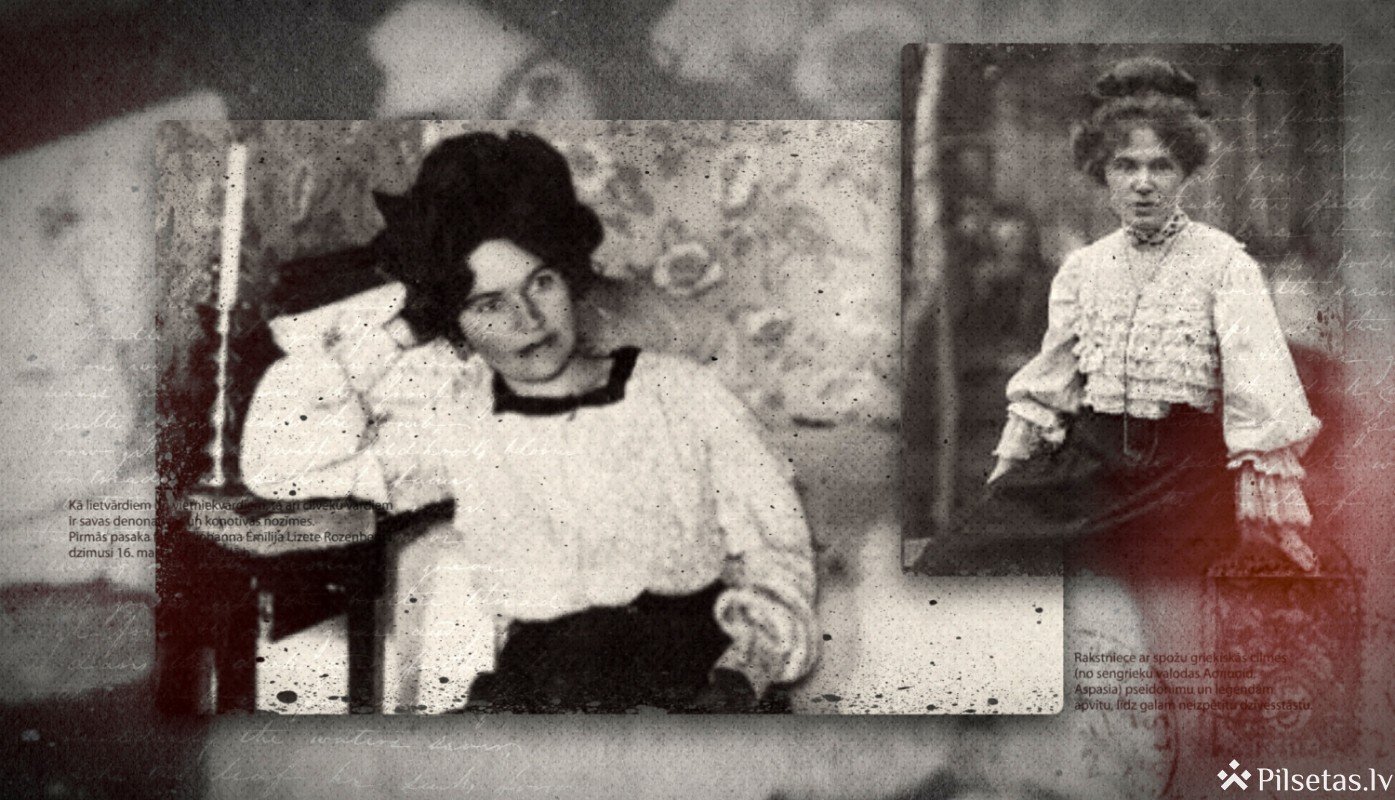
On Monday, 8 March, Riga City Council Chair Mārtiņš Staķis met with members of the public and researchers to discuss the initiative to erect a monument in Riga to the Latvian writer, public figure and politician Elza Rozenberga, also known as Aspazija.
“Aspazija is one of the most important and best-known figures in Latvia. An outstanding poet and playwright, as well as an active political figure, she became involved in the New Current movement and the struggle for Latvia’s freedom, and she always stood up for women’s equality. She was often persecuted for this position, but nevertheless remained steadfast. In my eyes, she is one of the most important women in Latvian society, so it is wrong that the capital has no monument to this outstanding figure,” Riga City Council Chair Mārtiņš Staķis emphasised.
The Mayor of Riga noted that no specific decisions had yet been made, but the participants had discussed what the monument might look like, what message it would convey and where it might be located. A competition for the artistic design will then be announced, and technical solutions will be discussed.
Zanda Rozenberga, director of the Rainis and Aspazija Museum, said that such a monument would provide the city with particular added value. “The monument’s conceptual dimension is very important. It will be the solution of a particular artist, but its central idea is a democratic environment, openness and accessibility for tourists, so that every visitor will have the opportunity to learn about Aspazija as a person,” said Rozenberga
Agnese Logina, a member of the Riga City Council and co-chair of the Culture Committee, said that creating the monument was an important step towards making the urban environment more inclusive and fairer to women. “The absence of a monument to Aspazija is, in a sense, a debt that we must repay to our own history. Aspazija has monuments in other Latvian cities, but Riga is the capital of Latvia, and the fact that there is no monument here is a rather serious omission. Riga’s urban environment as a whole does not reflect women’s achievements fairly enough—we have far too few streets named after historically significant women; at present there are only four. We do not even have a monument to a figure such as Aspazija. We must begin to rectify this,” said Logina.
“The idea of a monument to Aspazija seems very important to me in the sense that it is emerging precisely now. I see the kinship between it and what we are currently sensing in Riga’s political environment, and there are many strong women today who could identify—and do identify—with Aspazija’s image and ideas. This is not the first idea for a memorial honouring an outstanding woman from Riga during the current term of the Riga City Council; a project to restore the Vērmanis family memorial in the Great Cemetery has now been launched. We have outstanding women, outstanding men and outstanding people from Riga, and it is only thanks to them that this city is what it is,” said Riga City Council member Rita Eva Našeniece, chair of the Committee for Cultural and Historical Material Heritage.
The discussion was also attended by Rita Meinerte, director of the Association of Memorial Museums; literary scholar and Aspazija researcher Gundega Grīnuma; writer Inga Ābele, author of the play “Aspazija. Personally”; and civic activist Lolita Tomsone, director of the Žanis Lipke Memorial.
On 16 March this year, just one week later, Aspazija’s 156th birthday will be commemorated.
Information prepared by:
Project Coordinator of the Public Relations Department of the Riga City Council
Categories:
Culture;








