
Riga Freeport Offers Two Development Scenarios
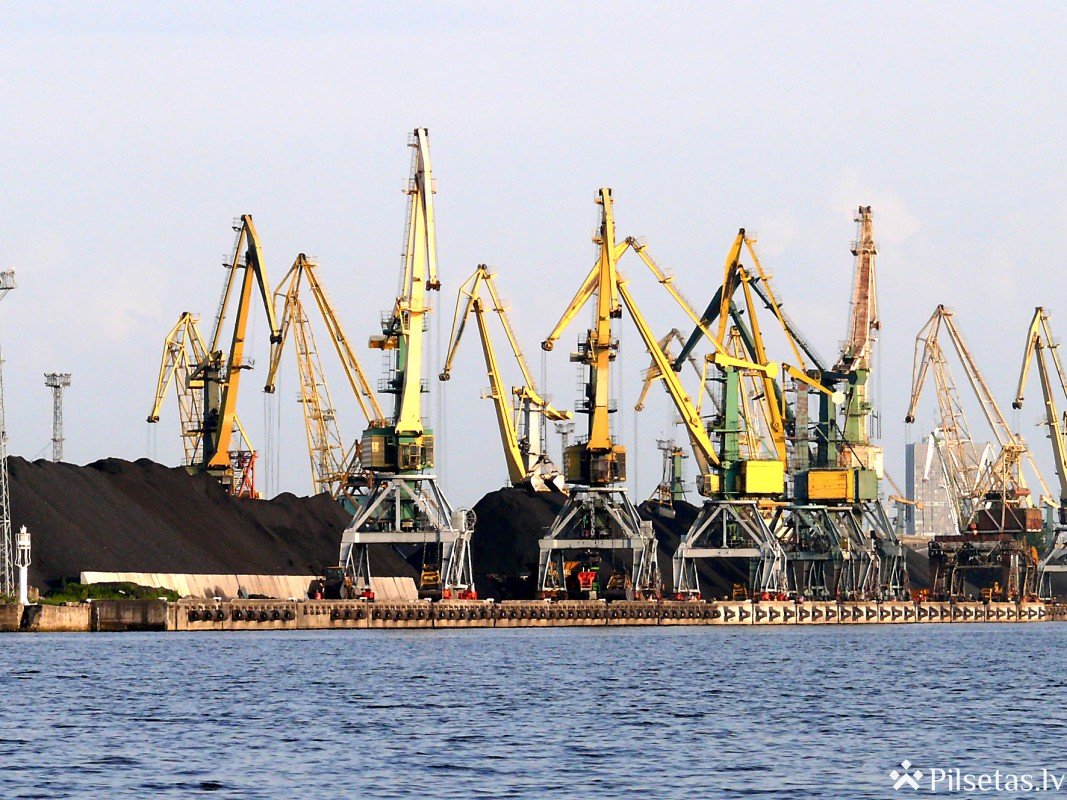
Alongside its existing strategic areas of activity, the Riga Freeport Development Programme for 2019–2028 provides for expanding port operations by promoting industrialisation and the entry of new companies into the territory of the Riga Freeport. The new Development Programme also provides for paying additional attention to the development of the passenger transport segment, while continuing work on attracting new cargo, diversifying cargo, substantially developing port infrastructure and improving the port governance model.
“The new Development Programme of the Riga Freeport is a very important planning document that will determine the port’s future development course over the next decade. The port is one of the cornerstones of Riga’s and Latvia’s economy as a whole; therefore, successful port development is one of the essential prerequisites for Riga’s growth. The Riga Freeport Board has carefully followed the process of developing the new Development Programme and will continue to devote considerable attention to monitoring its implementation,” emphasises the Chairperson of the Riga Freeport Board.
The Riga Freeport Development Programme for 2019–2028 is a comprehensive planning document that includes an assessment of the current situation, market analysis, cargo turnover forecasts, and a development strategy with 14 defined strategic objectives, their implementation and performance indicators, and criteria. The strategic objectives have been formulated and structured in accordance with the four main areas of activity of the Freeport of Riga Authority: cargo handling and passenger transport; the development of added value, manufacturing and the territory; infrastructure development and innovation; and port governance.
“Following global trends, the Riga Freeport has changed its operating strategy. The time when cargo ‘looked for’ ports has passed; in the current situation, both the port authority and the companies operating in the port must join forces to attract cargo and also move towards cargo diversification, while being prepared for changes in the range of cargo. In the new development plan, we have focused our attention on industrialisation—we will promote the development of manufacturing and value-added services, as well as more efficient use of the port territory and the attraction of development projects to the vacant areas of the Riga port,” emphasises Ansis Zeltiņš, Freeport of Riga CEO.
Detailed action for achieving the objectives, including their sources of financing and economic justification, will be defined in successive Action Plans—the first Action Plan will cover the period from 2019 to 2022, while each subsequent plan will cover a three-year period. These planning documents will allow for a more flexible response to market changes, updating individual strategic objectives or areas of activity where necessary.
The Riga Freeport Development Programme for 2019–2028 outlines two cargo volume development scenarios—the Minimum and the Optimistic scenarios. The Minimum scenario envisages a situation in which several market factors unfavourable to the Riga Freeport occur simultaneously, while the Optimistic scenario examines a situation in which the maritime cargo transport market develops favourably for the Riga Freeport.
The Minimum scenario outlines a decrease in the Riga Freeport’s cargo turnover over the next decade to 29 million tonnes, with the main reason being a reduction in energy cargo. Despite this, in contrast to total cargo volume, this scenario envisages an increase in container cargo turnover to 610,000 TEU in 2027.
The Optimistic scenario, in turn, envisages that the Riga Freeport’s total cargo turnover will return to the level of 41 million tonnes over the next ten years. Container cargo will make the largest contribution to this increase, with its volume rising to 720,000 TEU in 2027. It should be noted that this scenario identifies 2037 as the year when the volume of container cargo at the Riga Freeport will exceed 1 million TEU, with transit cargo accounting for the largest share. The number of passengers will also increase—from 830,000 in 2017 to 1 million in 2027.
In the market research conducted during the development of the Riga Freeport Development Programme for 2019–2028, container cargo, agricultural cargo and forestry cargo were identified as promising cargo segments for the Riga Freeport. Passenger transport also has development potential. Container cargo is the fastest-growing cargo segment in Latvia. Over the past ten years, its volume has doubled, increasing by an average of 10% annually and reaching 470,000 TEU. The Riga Freeport handles 99% of Latvia’s total container cargo turnover. The development outlook for this segment also remains positive in the coming years. The development potential of agricultural cargo (including grain and grain products) at the Riga Freeport is determined by two factors: the growth of Latvia’s grain exports and the opportunity to attract transit cargo from neighbouring countries (Estonia, Lithuania and Belarus) and Ukraine. The turnover of forestry cargo at the Riga Freeport is also mainly made up of Latvian exports, and the volume of forestry cargo at the Riga Freeport is expected to remain stable.








