Rodrigo Rikards Film Lecture Series
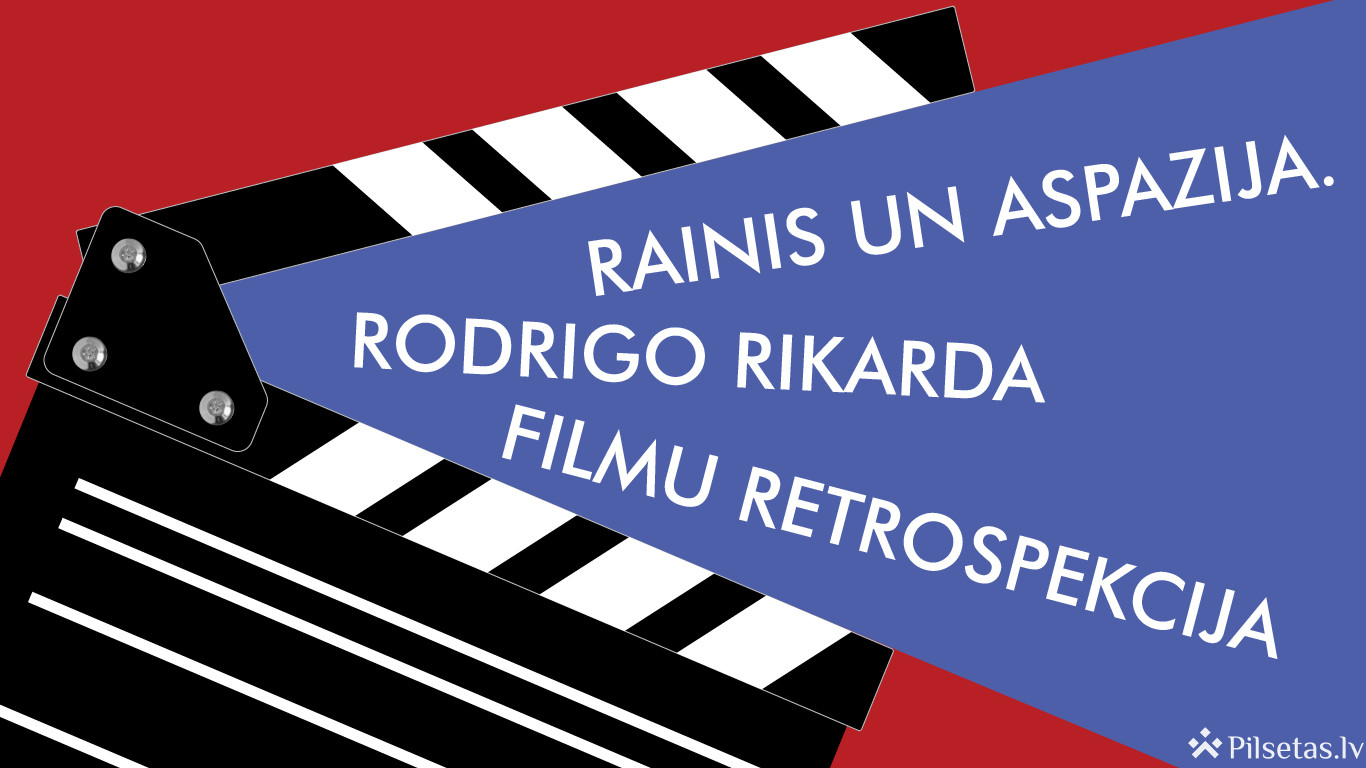
This autumn, the Rainis and Aspazija Summer House (Jūrmala, 5/7 Jāņa Pliekšāna Street) will be filled with the spirit of cinema. During five film lectures, visitors are invited to watch, together with film scholar Agris Redovičs and actors, films about Rainis and Aspazija by Rodrigo Rikards (1941–2014), the director and cinematographer who pioneered the documentary dramatisation genre in Latvia.
On 14 September at 5:00 p.m., the film lecture series will open with the film “Aspazija” (2001), in which the poetry and diaries of Aspazija are read by actress Dita Lūriņa. Before the film, film scholar Agris Redovičs and literary scholar Gaida Jablovska will discuss Aspazija.
During the following four film lectures, the four episodes of the film “Rainis” will be shown, one at a time. The leading role is played by actor Juris Strenga, who takes on the roles of narrator and guide, as well as performing quotations from the poet’s classical texts. In the films, Aspazija appears primarily as Rainis’s dialogue partner. In the first two films, the poetess is played by Vizma Kvēpa; in the final two, by Māra Zemdega.
On 28 September at 5:00 p.m. “Rainis. The Cold Desert of Exile Surrounds Me…” (1985). Film scholar Agris Redovičs and Jānis Zālītis, a researcher at the Rainis and Aspazija Museum, will take part in the film lecture.
On 12 October at 5:00 p.m. “Rainis. Sowing the Storm” (1986). Agris Redovičs and actress Vizma Kvēpa will take part in the film lecture.
On 26 October at 5:00 p.m. “Rainis. Castagnola” (1988). Agris Redovičs and actor Juris Strenga will take part in the film lecture.
On 9 November at 5:00 p.m. “Rainis: Silver Light. 1920–1929” (1989). Agris Redovičs will take part in the film lecture.
In her article “The Documentary Rainis, As Far as That Is Possible”, film journalist Kristīne Matīsa writes about the final two films: “The principal visual splendour of both final films lies in the travel landscapes, as in the third film the crew follows in Rainis’s footsteps to Switzerland, while in the fourth they travel to Israel and Egypt. It is interesting that Rikards’s tetralogy tells not only of Rainis’s life, but also of the period in which each film was made—with the National Awakening, new opportunities emerged. Rodrigo Rikards’s films are excellent supplementary material for school curricula: quotations from ‘Joseph and His Brothers’, ‘Fire and Night’ and other literary works become much more accessible when they seem to arise naturally from the context—from Rainis’s feelings and living circumstances at the time a particular work was being written.”
Rodrigo Rikards was born in Riga on 20 September 1941. He graduated from Riga Secondary School No. 2 and, after completing secondary school in 1960, began working for Latvian Television, which became Rikards’s first and only place of employment.
In 1967, he graduated with distinction from the All-Union State Institute of Cinematography in Moscow with the film “Half an Hour in Latvia”, the first colour film produced for Latvian Television. During his creative career, Rodrigo Rikards made more than one hundred films about Latvia’s cultural heritage and its most prominent figures, including Leonīds Vīgners, Zenta Mauriņa, Oskars Kalpaks, Aspazija and Krišjānis Barons. These also included the film “Sirdsdaugava”, made in 1987 as a protest against the construction of the Daugavpils Hydroelectric Power Station. In 1995, Rodrigo Rikards founded the “Scilla” Visual Arts Studio.
For his services to the art of filmmaking, he was awarded the Order of the Three Stars.
Admission: 2 euros; pupils, students and seniors: 1.50 euros.
Photographs and video materials may be published online and used in museum publicity activities.