
MJ: Return to the country of habitual residence must be ensured in the child’s best interests
Published: 02.06.2022
Add Events
On Wednesday, 1 June, International Children’s Rights Protection Day, representatives of the Ministry of Justice,
the Riga Orphan’s and Custody Court, the Council of Certified Mediators, the Council of Certification
of Psychologists and the Latvian Council of Sworn Court Bailiffs presented the jointly developed
guidelines on enforcement in cases concerning the return of children to the country of
habitual residence.
Deputy Director of the International Cooperation Department of the Ministry of Justice,
Anastasija Jumakova, said: “The guidelines developed provide clarification on aspects of the
enforcement process not only for the institutions involved in it, but also for parents and other
relatives of the child involved in the enforcement process. The guidelines will not only help to
develop a common understanding of the enforcement process in these cases, but will also help to
ensure voluntary compliance with court decisions or even deter conduct that lawyers refer to as
the civil abduction of a child.”
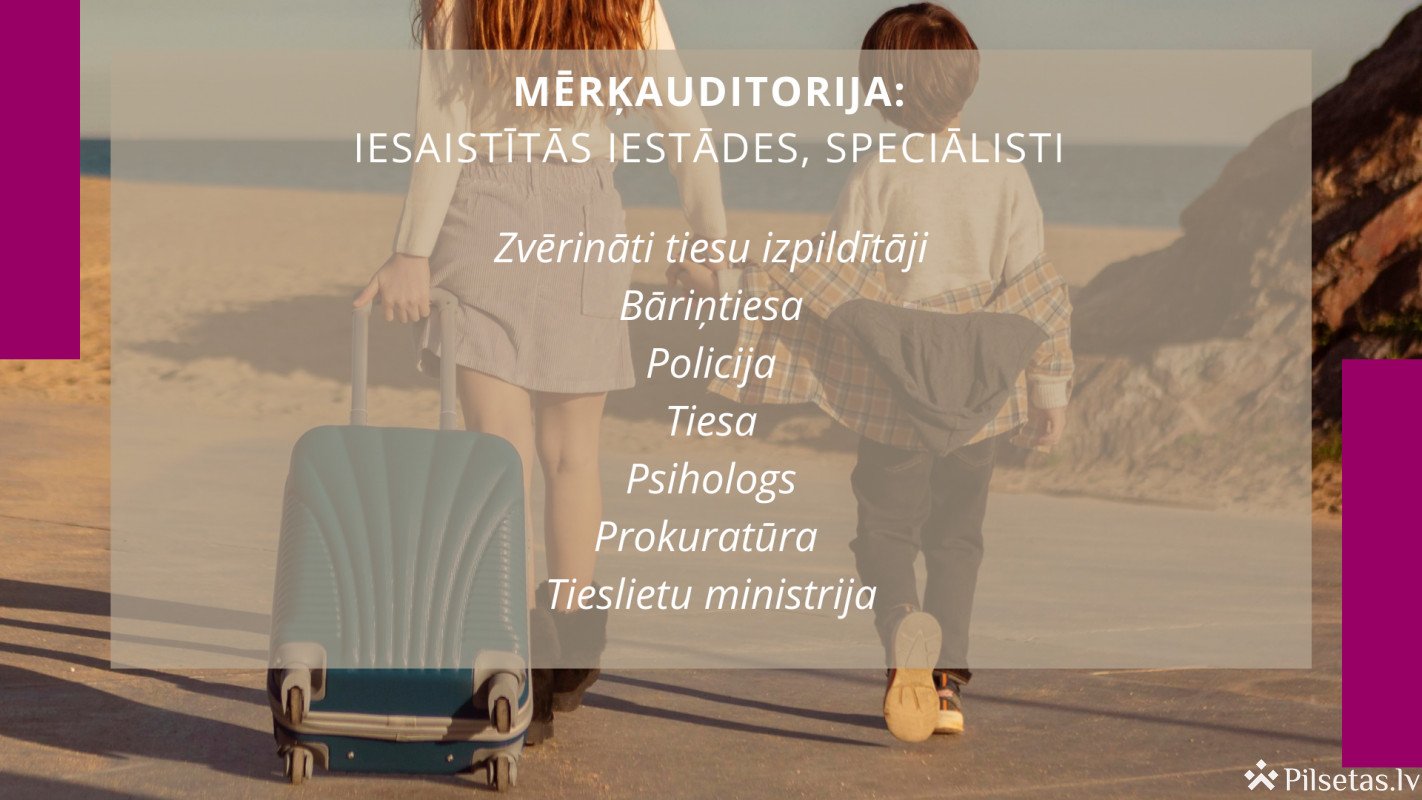
The guidelines were developed by an interinstitutional working group led by the Ministry of Justice,
which included sworn court bailiffs, judges of the Vidzeme Suburb Court of Riga City, as well as
representatives of the Ministry of the Interior, the State Police, the Ministry of Welfare, the State
Inspectorate for Protection of Children’s Rights, the Office of the Ombudsman, the Latvian Association
of Orphan’s and Custody Court Employees, the Council of Certification of Psychologists and the Council of Certified Mediators.
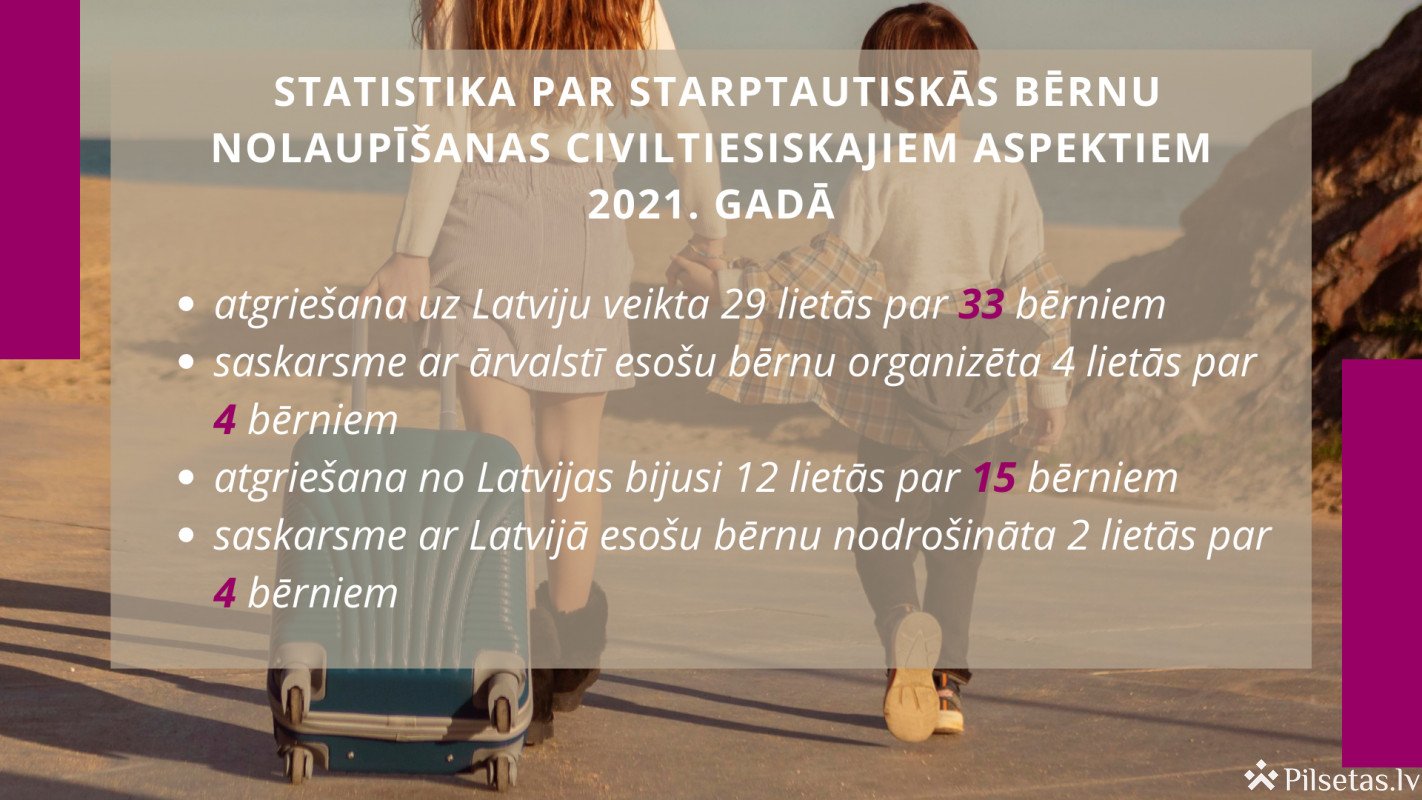
According to statistical data on the civil-law aspects of international child abduction, in
2021, the return to Latvia of children was carried out in 29 cases involving 33 children, contact with
a child residing abroad was arranged in 4 cases involving 4 children, while return from Latvia took place
in 12 cases involving 15 children, and contact with a child residing in Latvia was ensured in 2 cases involving 4
children.
To ensure representation of the child’s best interests, cooperation among all parties involved is
essential. Iveta Lielmane, Head of the Family Dispute Department of the Riga Orphan’s and Custody Court, stresses:
“Cooperation is the key word when discussing the content of the new guidelines and their application in practice.
In our work, we see how important cooperation is in resolving disputes—between the parents themselves,
between parents and institutions, and also among different bodies and institutions.
The guidelines will be a valuable aid for specialists and promote an understanding of opportunities to address
emerging circumstances preventively, as well as serve as a roadmap for coordinated and consistent action by institutions,
thereby also reducing children’s exposure to potentially traumatic experiences.”
To promote voluntary compliance with decisions and reduce potentially traumatic experiences for children,
the opportunities offered by mediation should, among other things, be used, and discussions should be held with
the persons concerned at several stages—both when the case is initiated and once the decision on the child’s
return has become legally effective. “Mediation, as a dispute-resolution process between parents based on the
principles of voluntariness and cooperation, should be available at any stage of the child’s
unlawful removal proceedings. Parents never cease to be the child’s mother and
father. For mediation to provide the greatest possible support to parents and the child, the institutions and
specialists involved in resolving the situation must act proactively, both by personally approaching and informing
the child’s parents about the possibility of mediation and by sending formal offers of mediation,”
said Evija Kļave, Chair of the Council of Certified Mediators.
Emphasising the involvement of psychologists in resolving problematic situations, Rita Niedre, Chair of the
Council of Certification of Psychologists, said: “A psychologist is one of the specialists involved in preparing the child
and family for the enforcement procedure. One of the main objectives of a psychologist’s involvement is to inform the
officials involved in the enforcement process about the method of enforcement that would be as gentle as possible for
the child in the specific situation. If necessary, the psychologist also provides support to the child.”
In turn, Elīna Avota, Acting Director of the Latvian Council of Sworn Court Bailiffs, said: “Court bailiffs are the persons
who enforce court decisions concerning the return of children to another country. The aim of sworn court bailiffs, like that
of everyone involved, is to determine the enforcement procedure most appropriate for ensuring the child’s best interests,
providing for such procedures and arrangements that make the methods used in this process as gentle as possible
for the child.” The jointly prepared guidelines will create a common understanding of the enforcement process among all
persons involved, facilitating the enforcement of court decisions in a manner that is as consistent as possible with
children’s interests, E. Avota emphasises.
The guidelines on enforcement in cases concerning the return of children to the country of habitual
residence are available here .
Evija Rimšāne
Public Relations Specialist
Communication Department
Ministry of Justice
Telephone: 67036861
E-mail: Evija.Rimsane@tm.gov.lv
Categories:
Government;








