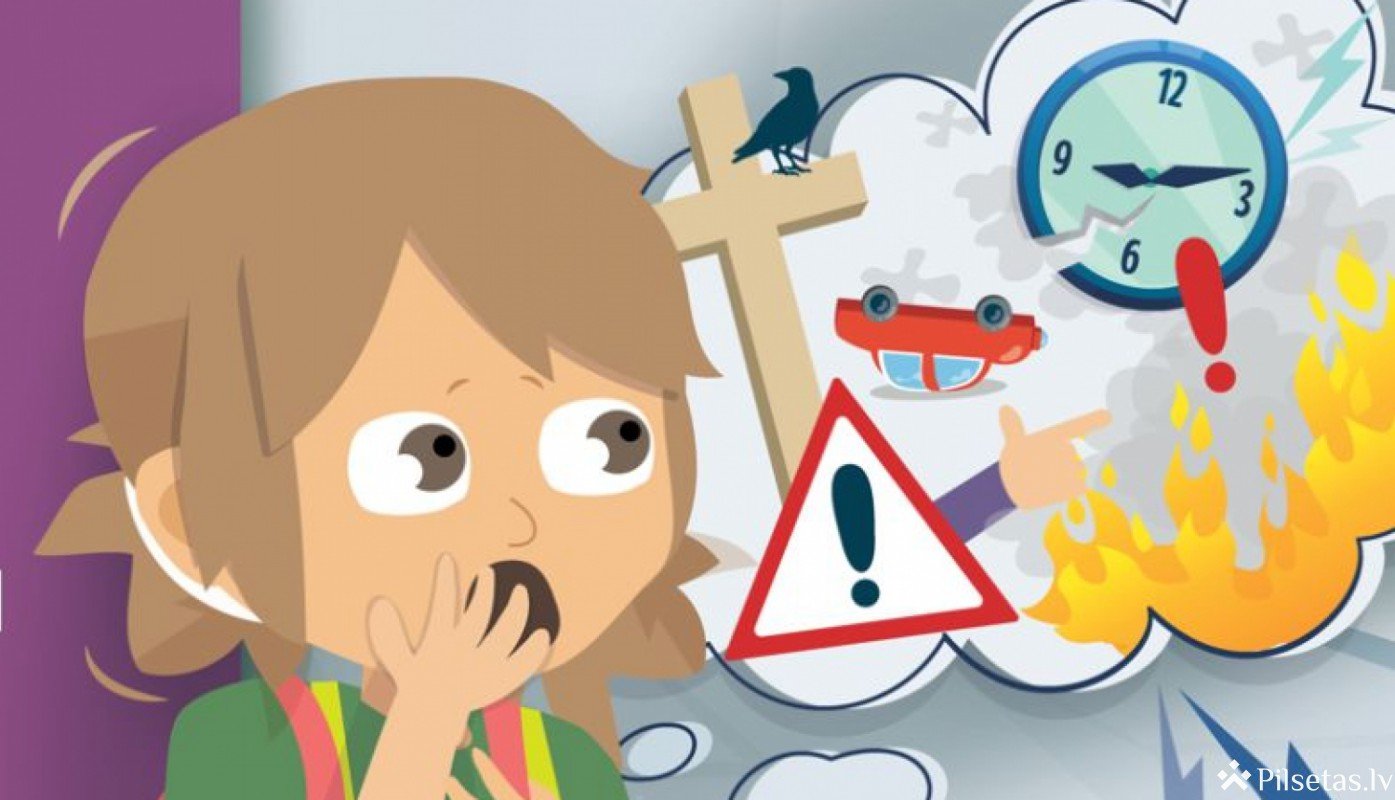
Although we are not directly involved in the war, the current situation is highly anxiety-provoking not only for children and young people but also for adults. And children feel this. It is entirely natural that we want to protect children from the news, but we must not deny what is happening, especially when this topic is being discussed in cafés, kindergartens and schools. Our avoidance of conversations of this kind may make the situation even more anxiety-provoking for children.News about war is traumatic. The thought that someone might wage war in order to deliberately harm someone is deeply distressing for children, young people and adults alike. At this point, we have to start talking to and teaching children and young people about a world entirely different from the one in which we grew up and what we try to instil in our children—a world in which, alongside politeness, kindness and mutual respect, and where problems are resolved without the use of force, there are also other realities....
Your child asks you questions about war…
Perhaps the comparison is not entirely apt, but it is best to approach conversations about war in much the same way as the question “How are babies made?”. We would not tell very young children the same things we would tell teenagers. Moreover, it is not only physical age that matters, but also psychological readiness. Information that is too detailed may traumatise young children, while information that is too simplistic or biased will cause us to lose authority in the eyes of young people.
Find out what the child knows, what they have heard. What is being discussed in kindergarten and/or school, and who is saying what. Ask for their opinion. This is especially important in relationships with younger children, so that you can understand their greatest concerns, because they usually hear anxious phrases out of context, such as a nanny crying, “We will all be dead next week anyway,” and so on. This will also help us work out what might help the child cope with their emotions. In other words, the adult must first calm down and calm the child, and only then can we provide the child with facts. In addition, if the child comes home with distressing news, it is essential to speak with the teachers about what is being discussed in the children’s presence.
Do not avoid conversations about war. If children talk to you, that is a compliment. It means they feel safe. Do not be afraid that they ask the same questions repeatedly. It means they are anxious and perhaps, instead of another history or geopolitics lecture, they simply need a hug. You can choose a particular time for these conversations, such as the early evening (although late evening itself may not be the best choice, as there is a risk of insomnia). Incidentally, it is good to have such conversations while out walking, so that the kitchen or another place does not subsequently become associated with the topic of war. Do not interrupt their questions
Do not minimise the child’s questions. Do not say, “you don’t understand,” “you’ll understand when you grow up.” That is frightening. Look for words and examples. Children need to practise thinking about difficult things as well. This is precisely how we train children to think critically and look at facts from different perspectives. Otherwise, we may unintentionally train children to think in black-and-white terms and to take a superficial view, because thinking is tiring.
In accordance with the child’s age, try to do the impossible—explain the meaning of war in simple words. I do not really know how to do this myself. For example, a war may be intended to prevent even worse things. In war, a country may strive to protect its people, families and other values. Explain that violence is not a good way to achieve one’s goal and that countries do everything possible to avoid war. The child does not need to know every detail, but be prepared for some children to want to know more and more deeply. Do not be afraid of this—we need good politicians, diplomats, military leaders and so on, and the sooner children become interested in this topic, the greater the advantages they will have in their careers. But respect the fact that, after taking in a certain amount of information, they may become interested in anime, playing the guitar or computers instead. That is wonderful too.
Change the perspective. Do not talk only about war. This is a good approach not only in the family, but also in kindergarten and school. Talk to children about what peace is. What can you do every day to promote peace in your surroundings? What can we all do together in our group or class? Agree on your values and on what peace really means in your world, for example
- peace means sharing.
- peace means resolving disagreements without fighting.
- peace means expressing emotions with words.
- peace means keeping your hands and feet to yourself when you are angry.
- Peace means reaching an agreement. And so on.
And talk about what an agreement really is, what diplomacy is and how you understand these things in everyday life. These are absolutely wonderful conversations to have even with the youngest little thinkers!!
Talk about what is happening in the world. Explain why it is important to understand what is happening in the world at all. In this case, history teachers can be a valuable source of support. The better children understand global processes, the easier it will be for them to broaden the scale of their thinking and understand that there are various organisations that care and help. The Red Cross, for example. Explain what diplomacy is: that every country does everything possible to avoid war. Explain what NATO is. That Latvia is a member of NATO. This is especially important for preschool and primary-school-age children, who may still think that everything in the world happens because of them.
At school, organise or suggest nuanced discussions and debate clubs during lessons or extracurricular activities. Divide young people into different groups: for example, one group should defend an aggressive tactic, while another should take very cautious, even neutral, positions. Invite young people to gather information from different sources about when each strategy was decisive. Together, explore what tools we could use to influence individuals, organisations and countries—and which tools we definitely should not use. Why? What should our priorities be? What price are we willing to pay? What would you decide if you were the head of a particular NGO or a country? The ability to analyse different perspectives and keep the opposing sides’ viewpoints in mind during discussions is a skill that can be developed.
Show that even in wartime there are good people who care and help. Do not be afraid to share everyday stories about how people are coping and how they help one another. (It is difficult for us to tear ourselves away from social media anyway, and we look for these stories.) Share funny stories and amusing incidents—there are usually quite a few of those as well. Human stories. You will see that these stories will largely shape their value system. Explain that mothers and children receive special care during war, and that everyone will do everything possible to keep them safe
Encourage them to help. Think together about how to help. For example, explain how Latvia raised one and a half million for fuel with the help of ziedot.lv, and how important that is. Find out what is worrying the child and think together about how you might address it. Encourage them to stand up for those who are being harmed.
Monitor your emotional state. It is not easy to remain calm when discussing such a frightening and extremely complex topic. But monitor the child’s emotional state and respect it when things become too much for them. Children, as well as young people, cope with complex topics much better in small portions. And I return to the subject of how children are conceived: if children and young people feel that this issue is extremely distressing for you, they will not talk about it in order to spare you. But if they do not have a safe shoulder to lean on and a safe environment, their anxiety may manifest itself in various other ways—psychosomatic reactions, behavioural problems, an inability to concentrate, and so on.
Always leave the conversation open: “If you have any more questions later, feel free to ask, okay?” It is often the case that the biggest and heaviest thoughts will roll through their minds just before bedtime. Scratch their back, massage their feet or head. Create various rituals. These small daily rituals signal that everything is all right in life and that there is stability. And that is the feeling it is most important for us to convey amid this uncertainty.
May there be peace in your home and in the world!
Author: uzvediba.lv